Author Archives: Dean Allen

Unknown's avatar

About Dean Allen

Six continents in ten months! For much of 2014 and 2015, I shared a family sabbatical with my wife, son, and daughter. During Summer 2019, we took another round-the-world trip. I learned that I was at home while traveling. In this blog, I have described some of our experiences and the lessons we learned traveling the world. You will see my (Dean's) reflections at LDeanAllen.com and my daughter, Rachel's, reflections at RachelSeesTheWorld.wordpress.com. Now, we are at home. I (Dean) am a professor at Northwest Florida State College, and I encourage students to find the good life. My teaching is informed and enriched by my travel. I also serve as pastor of a congregation, seeking to foster a community in which people live their lives with deep meaning, fullness, and joy.

Creative Extremists

Letter from Birmingham Jail by Joseph Holston (2008)

“Letter from Birmingham Jail” by Joseph Holston (2008)

Today, April 16, 2013, marks the fiftieth anniversary of Martin Luther King’s “Letter from Birmingham Jail.” King was imprisoned on a charge of parading without the required permit. He wrote the letter in response to a statement issued by eight clergymen calling his activities “unwise and untimely.” In the letter King offered several phrases that are well known and deeply moving:
• Injustice anywhere is a threat to justice everywhere. We are caught in an inescapable network of mutuality, tied in a single garment of destiny. Whatever affects on directly, affects all indirectly.
• We know through painful experience that freedom in never voluntarily given by the oppressor; it must be demanded by the oppressed. Frankly, I have yet to enegage in a direct-action campaign that was “well timed” in the view of those who have not suffered unduly from the disease of segregation.
• An individual who breaks a law that conscience tells him [or her] is unjust and who willingly accepts the penalty of imprisonment in order to arouse the conscience of the community over its injustice, is in reality expressing the highest respect for the law.

In response to critics who called King and other extremists for the nonviolent, direct action, King said, “Though I was initially disappointed at being categorized as an extremist,I gradually gained a measure of satisfaction from the label. Was not Jesus an extremist for love: ‘Love your enemies, bless them that curse you, do good to them that hate you, and pray for them which despitefully use you, and persecute you.’ Jesus was an extremist for love, truth and goodness. Perhaps the South, the nation and the world are in dire need of creative extremists.
During her sermon on Sunday at our church, my wife, Lisa, asked members of the congregation to consider ways in which we might respond, like Peter in Acts chapter: “We must obey God rather than any human authority.” Are there settings in your life where a creative extremist might be needed? How will you respond?

Hope Springs Eternal

Green Monstah, Fenway Park

Green Monstah, Fenway Park

Having lived in Boston for a dozen years, part of my heart still is there! I confess to loving the Red Sox, Patriots, and Celtics. I was fortunate to live in Beantown when the Sox finally broke the Curse of the Bambino, and the Patriots won three Super Bowls. And, the Celtics improved, finally winning a championship a couple of years after I moved.
In October 2004, our daughter was born on the day the Red Sox came back from three games down to defeat the Yankees in the American League Championship Series. We celebrated for two reasons!
One of the rituals of life this time of year is Opening Day in the baseball season. And, no matter what happened last season, there always is hope in Spring! The last two years have been tough on Red Sox Nation with the collapse in 2011 and last year’s debacle. But, hope springs eternal!
The new season begins on April 1 as the Sox head to Yankee Stadium to take on the Yankees. Then, Opening Day at Fenway is April 8. I’ll put on my Sox cap and root for the team.Green Monstah Left Field - Rotated
Go Sox!

Prisoners of Hope

Entry into Jerusalem, Fernwood Baptist Church, Spartanburg, SC

Entry into Jerusalem, Fernwood Baptist Church, Spartanburg, SC

During worship at our church on Sunday, we celebrated Palm Sunday, which marks Jesus’ entry into Jerusalem at the beginning of the final week of his life. We read from Zechariah 9:9-12, which often is read on Palm Sunday because of the prophet’s words about the coming ruler of God’s people. Zechariah says: “Lo, your king comes to you; triumphant and victorious is he, humble and riding on a donkey, on a colt, the foal of a donkey.” Jesus entered Jerusalem on a donkey, leading his disciples to hail him as the long-sought King of God’s people.
Zechariah continues, “Return to your stronghold, O prisoners of hope, today I declare that I will restore to you double.”

During worship, my wife, Lisa, offered the following prayer:

O God, I like the idea of power, of controlling life – my life.
And the sounds of the prophet resonate with me –
Rejoice greatly! A King is coming triumphant and victorious.
Yes, I like that!
And yet in the same breath I hear that
the way of the king is humble, lowly, near to the earth.
Help us this day in our lives to be attracted to humility rather than control.
How will you help us live out our lives as followers of Christ if we look through the lens of humility?
O God, I feel the very real experience of opposition.
As we live our lives, there are times that it feels like we are being opposed by
struggle,
pain,
fear,
evil.
We may feel surrounded by difficulty and disappointment,
disillusionment and even forms of death.
Your Word reminds us that in those moments, in those days, in those months and maybe even years of struggle,
that we are
Bound by hope –
prisoners of hope,
not prisoners of evil.
We can trust that you are always working with us to restore us.
We claim and we call upon that promise,
as those with hope. Amen.

Trust and Gratitude

Throughout Lent, our church has focused on the story of the Prodigal Son, which is found in Luke chapter 15. Much attention is focused on the Younger Son who leaves, squanders his money, and is received back into the family by his loving father. The parable includes an Elder Brother who is livid at his brother’s and father’s actions, and the story ends without a clear sense of what happened with the elder brother. Did his resentment and anger subside? Did he receive his father’s forgiveness and establish a relationship with his younger brother? Did he continue to seethe and live the rest of his days without his father and brother? We do not know.

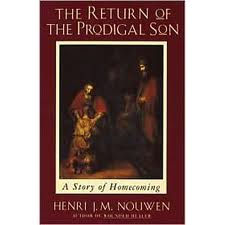
Nouwen Return of the Prodigal SonIn The Return of the Prodigal Son, Henri Nouwen discusses the ways in which many people, like the Elder Son, are lost in resentment and anger. Nouwen also writes about the possibility of the elder son’s return. He says, “I guess that all of us will someday have to deal with the elder son or the elder daughter in us. The question before us is simply: What can we do to make the return possible?”

Nouwen suggests two disciplines, two concrete daily practices that may allow us to move beyond resentful anger toward relationships. The first practice is trust, which is a deep inner conviction that God wants to be in relationship with you. The second practice is gratitude, which is a conscious choice to recognize that all of life is a pure gift to be celebrated with joy.

Nouwen writes:

Both trust and gratitude require the courage to take risks because distrust and resentment, in their need to keep their claim on me, keep warning me how dangerous it is to let go of my careful calculations and guarded predictions. At many points I have to make a leap a faith to let trust and gratitude have a chance: to write a gentle letter to someone who will forgive me, make a call to someone who has rejected me, speak a word of healing to someone who cannot do the same. The leap of faith always means loving without expecting to be loved in return, giving without wanting to receive, inviting without hoping to be invited, holding without asking to be held. And every time I make a little leap, I catch a glimpse of the One who runs out to me and invites me into joy, the joy in which I can find not only myself, but also my brothers and sisters. Thus the disciplines of trust and gratitude reveal the God who searches for me, burning with desire to take away all my resentments and complaints and to let me sit at God’s side at the heavenly banquet.

Reading Nouwen’s book and reflecting on the Prodigal Son during Lent, I have recognized my Elder-Son tendencies. And, I am open to practicing Trust and Gratitude. What do you think?

The Elder Son

Ralph Waldo Emerson said the Prodigal Son is greatest story told in the Bible or out of it. The most fascinating character in the story is the Elder Son whose anger, hurt, and fury at his brother and father boils over.

I find it helpful and interesting to imagine the story told in the present day. Perhaps you will find the contemporary interpretation thought-provoking and helpful as well.

Luke 15:25-32
A Contemporary Interpretation

Now the elder son had been working in the office of the family’s business all day. On his way home, he drove by the country club, and he recognized many cars in the parking lot. He saw familiar people going into the club where there was music and dancing. He stopped in the parking lot and asked one of the workers what was going on. He replied, “Your brother has come, and your father is hosting a big party because he has gotten him back safe and sound.”

Then the elder son became angry and refused to go inside. His father came outside and began to plead with him. But the elder son replied to his father: “Listen! For all these years I have been working like a slave for you in the family business, and I have never once disobeyed you. Yet, you have never given me even a little party; you never had a party for my little league team when we won the championship; you never celebrated when I made the honor roll. But when this son of yours came back, who has burned through your money – taken from our company – with prostitutes, you host the biggest celebration this club has ever seen!”

Then the father said to him, “Son, my dear child, you are always with me, and all that I have – all that I have built – is yours. But we had to celebrate because this brother of yours was as much as dead and has come to life; he was lost and has been found.”

Offensive Behavior

Have you ever done anything offensive to others? Probably so, and I’m guessing that likely it was unintentional. Or, perhaps, in a flourish or a fluster, you did something you knew would offend others.

Rembrandt, "The Return of the Prodigal Son"

Rembrandt, “The Return of the Prodigal Son”

In the next three weeks, our church will consider three people whose behavior was deeply offensive. In our worship, we will focus on one of Jesus’ best known stories (or parables) found in the Gospel of Luke, Chapter 15, which commonly is called “The Prodigal Son.” A better title would be “Lost Sons” because the story provides details about a father’s two sons, both of whom are lost: the younger son who leaves home and squanders his early inheritance and the older son who stays home and simmers in anger.

Perhaps an even better title would be “The Offensive Family” because all three characters – younger son, older son, and father – act in ways that are deeply offensive to the norms of their day.

The younger son brashly demands his inheritance, in effect wishing that his father is dead. The Greek verb is an imperative, which means the son says, “Give me the money” with nothing close to a “please” included. No respectable son would make such an offensive demand.

The older son, upon hearing the party given to celebrate his brother’s return home, acts in offensive ways when he refuses to enter the party and confronts his father in view of neighbors and hired workers.

And, perhaps the most offensive behavior of all is displayed by the father. Rather than treating his wayward son as others expected, which was to consider him dead and separated from family and community, the father runs to meet the younger son upon his return home and gives him the best things possible – embrace, kiss, robe, ring, shoes, and party. Surely, any neighbors would have been aghast at the father’s behavior. And, when the older son refuses to enter the celebration, the father goes out to him and pleads with him to come join the party.

Fred Craddock, noted Biblical scholar and preacher, refers to the “offense of grace” that Jesus provides in telling this story. How offensive – and how wonderful – that a parent is not held back by social expectations but instead goes after both sons in love.

The next three Sundays in our worship, we will remember each of these characters. I hope you will come – and prepare to be offended!

Clarence Jordan

Clarence Jordan is one of my heroes of the faith. He was a leading Christian prophet in the southern United States during the twentieth-century. Born into a successful family in Talbotton, Georgia, Clarence studied agronomy at the University of Georgia before eventually earning a Ph.D. degree from Southern Baptist Theological Seminary in Greek and New Testament.Clarence Jordan

Clarence was deeply committed to racial equality, and in 1942, he co-founded Koinonia Farm in Americus, Georgia, which followed the then-controversial conviction that all people, regardless of race, should be allowed to live together, work together, and eat together around a common table. Members pooled their resources in a common treasury, and they trained farmers – black and white – in advanced farming techniques to help break a cycle of poverty. Because of these commitments, Clarence and other Koinonians were disfellowshipped by their Baptist church, and Koinonia Farm was subjected to threats, violence, and economic boycotts.

At one point, Clarence asked his brother and attorney, Robert, to serve as legal counsel for Koinonia. Robert refused, citing the damage it would do to his personal and professional aspirations. Eventually, Robert became a Georgia state Senator and Chief Justice of the Georgia Supreme Court. During their conversation, Clarence charged Robert with being an admirer of Jesus rather than a disciple. Their conversation is a gripping exchange that has challenged me to consider the ways in which I do or do not follow the challenging path of Jesus in my life.

While reflecting on the tense exchange between Clarence and Robert Jordan, I have been gripped by another question: what became of their relationship? Did the brothers part ways because of their different understandings and convictions? Did they drift apart as Clarence lived at Koinonia and Robert achieved professional success? Did they continue their relationship and have further conversations in which both brothers were challenged and stretched? Did they grow closer to one another because of their mutual sharing and love?

I have not been able to find a satisfactory answer to my question. One source suggests that Robert eventually came to be convinced by Clarence’s convictions. This source quotes Robert as saying that Clarence “was the greatest Christian I have ever known.” I find this possibility hopeful, but I have not located another confirmation. Perhaps this did happen. Perhaps the brothers who differed so vociferously over the most pressing social issue of their day did, in fact, remain in relationship with one another. I hope so.

If you are interested in reading more, you may want to read The Cotton Patch Gospel, Clarence’s translation of the New Testament in the vernacular of South Georgia English or The Substance of Faith, which includes many of his sermons. In so doing, you may find yourself challenged to join “The God Movement,” as Clarence called it, and work on your own “demonstration plot for the kingdom of God.”

Trying New Things

I recently enjoyed the day trying something I had never done before. I joined a group of youth from our church for a Snow Tubing adventure at Ski Hawksnest in Seven Devils, North Carolina.

View from the Tube

View from the Tube

The day was cool and crisp with enough chilly wind to remind us it is winter but with blue skies spilling plentiful sunshine on the slopes. It was a fun day with lots of laughs and memories.

I have enjoyed sledding and snow skiing for years, but I had never been Snow Tubing before. To my surprise, the lanes are wide and gently sloping, the staff tells you when you need to slow down by digging your heels into the snow, and in case you are going too fast, large red bean bags are waiting to stop your skid! The best surprise, however, is that a conveyor belt carries you back up the hill.

It is a fun time that I heartily recommend.

This week, much of my time and attention will be given to preparing for worship on Sunday at our church. Throughout Lent, we are focusing on Luke, chapter 15, and the story of the Prodigal Son. On Sunday, my wife, Lisa, with whom I serve as Co-Pastor will try something we have never done. We will deliver a tandem dramatic sermon, and both of us will be in character portraying the hearers of Jesus’ parable.

At the beginning of Luke, chapter 15, the text says that tax collectors and sinners – social and religious outsiders – listened to Jesus as well as Pharisees and scribes – religious authorities. During the sermon time in worship, Lisa and I will portray both types of hearers.

We have never tried this before, and it will be an adventure!

Happy Valentine’s Day

Happy Valentine’s Day

This week, we celebrate Valentine’s Day, and I have enjoyed seeing the candy, cards, and Cupids that emerged immediately after Christmas. This is a fun time when I am reminded to tell the people I love how much they mean to me and how thankful I am to have them in my life.
Often Valentine’s Day is reserved for a special occasion between two lovers. Think of young lovers gazing into one another’s eyes while opening beautiful cards and expensive chocolates. I have learned good lessons, however, about Valentine’s Day from my second-grade daughter and from the Finnish.
Like many elementary school students, my daughter is sharing Valentine’s greetings with all the students in her classroom. Every student is included, and no one is left out. Several days ago, she carefully wrote each student’s name to ensure proper delivery of the Valentine card. She made sure that every student will receive a Valentine greeting on February 14. My daughter even wrote her own name, ensuring that she will receive a Valentine greeting from herself!
20 head down (3)And, she prepared a special Valentine for an adult neighbor. She decorated a sheet of paper, wrote a special note on it, and just prior to sealing the envelope, she inserted a $20 bill. Sensing the enormity of this gift for an eight-year-old’s budget, I said that our neighbor would not expect to receive money. But, she insisted that she wanted to give the gift because of their friendship. She hopped on her bike, rode down the street, and gave her adult neighbor the Valentine.
As expected, our telephone rang the next day, and our neighbor said that, while she appreciated the generosity, she did not think she should take money from a child. After thinking about it, my wife and I told her that the gift was given freely and generously, and we believed she should receive it and use it to buy something special.
Extravagant generosity and deep-seated joy – all from an eight-year-old!
In Finland, Valentine’s Day is called Ystävänpäivä, which means “Friends Day.” On this day, Finnish people are encouraged to celebrate all their friends, rather than simply their lovers, and exchange greetings with a wide number of people. This is a good reminder that many people enrich our lives, and we can express our appreciation to them at this special time of year.
On Valentine’s Day this year, or perhaps during the coming weeks, you can take time to express gratitude to a number of friends. A card, a handwritten note, or a telephone call would be much appreciated – and it would make your own day brighter!
Happy Valentine’s Day!

Baptist Women in Ministry

Baptist Women in Ministry (BWIM) is an organization that encourages churches to support the giftedness of women for ministry and to encourage women to use their gifts in all aspects of the church’s life. BWIM logoSince 2007, BWIM has invited Baptist churches to participate in Martha Stearns Marshall Month of Preaching by having a woman preach during the month of February. This annual event has been a deeply significant source of joy and discovery for many women and churches.
I celebrate our church’s open support for women in ministry for many years. While Lisa preaches half of the Sundays, I still am pleased to participate in Martha Stearns Marshall Month. This event is a great opportunity for our church to stand with and support Baptists who still are hoping for and dreaming of the day that their church will allow women to preach. By participating in this event, our church voices our support of women in ministry, and we are counted with other Baptist churches in celebrating the calling and gifts of women. As BWIM, says: “Martha Stearns Marshall Month of Preaching provides us all with a chance to celebrate–to celebrate God’s good work in our midst.”
This Sunday, Amanda Miller will be our preacher. Amanda has been a very important member of our congregation since she moved to Spartanburg. I am grateful that she will be our preacher, and I pray that she will continue to experience God’s blessings and live her call to ministry.