Category Archives: Uncategorized

Trust and Gratitude

Throughout Lent, our church has focused on the story of the Prodigal Son, which is found in Luke chapter 15. Much attention is focused on the Younger Son who leaves, squanders his money, and is received back into the family by his loving father. The parable includes an Elder Brother who is livid at his brother’s and father’s actions, and the story ends without a clear sense of what happened with the elder brother. Did his resentment and anger subside? Did he receive his father’s forgiveness and establish a relationship with his younger brother? Did he continue to seethe and live the rest of his days without his father and brother? We do not know.

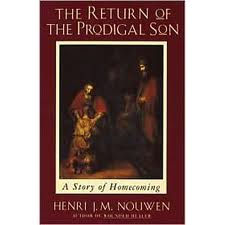
Nouwen Return of the Prodigal SonIn The Return of the Prodigal Son, Henri Nouwen discusses the ways in which many people, like the Elder Son, are lost in resentment and anger. Nouwen also writes about the possibility of the elder son’s return. He says, “I guess that all of us will someday have to deal with the elder son or the elder daughter in us. The question before us is simply: What can we do to make the return possible?”

Nouwen suggests two disciplines, two concrete daily practices that may allow us to move beyond resentful anger toward relationships. The first practice is trust, which is a deep inner conviction that God wants to be in relationship with you. The second practice is gratitude, which is a conscious choice to recognize that all of life is a pure gift to be celebrated with joy.

Nouwen writes:

Both trust and gratitude require the courage to take risks because distrust and resentment, in their need to keep their claim on me, keep warning me how dangerous it is to let go of my careful calculations and guarded predictions. At many points I have to make a leap a faith to let trust and gratitude have a chance: to write a gentle letter to someone who will forgive me, make a call to someone who has rejected me, speak a word of healing to someone who cannot do the same. The leap of faith always means loving without expecting to be loved in return, giving without wanting to receive, inviting without hoping to be invited, holding without asking to be held. And every time I make a little leap, I catch a glimpse of the One who runs out to me and invites me into joy, the joy in which I can find not only myself, but also my brothers and sisters. Thus the disciplines of trust and gratitude reveal the God who searches for me, burning with desire to take away all my resentments and complaints and to let me sit at God’s side at the heavenly banquet.

Reading Nouwen’s book and reflecting on the Prodigal Son during Lent, I have recognized my Elder-Son tendencies. And, I am open to practicing Trust and Gratitude. What do you think?

The Elder Son

Ralph Waldo Emerson said the Prodigal Son is greatest story told in the Bible or out of it. The most fascinating character in the story is the Elder Son whose anger, hurt, and fury at his brother and father boils over.

I find it helpful and interesting to imagine the story told in the present day. Perhaps you will find the contemporary interpretation thought-provoking and helpful as well.

Luke 15:25-32
A Contemporary Interpretation

Now the elder son had been working in the office of the family’s business all day. On his way home, he drove by the country club, and he recognized many cars in the parking lot. He saw familiar people going into the club where there was music and dancing. He stopped in the parking lot and asked one of the workers what was going on. He replied, “Your brother has come, and your father is hosting a big party because he has gotten him back safe and sound.”

Then the elder son became angry and refused to go inside. His father came outside and began to plead with him. But the elder son replied to his father: “Listen! For all these years I have been working like a slave for you in the family business, and I have never once disobeyed you. Yet, you have never given me even a little party; you never had a party for my little league team when we won the championship; you never celebrated when I made the honor roll. But when this son of yours came back, who has burned through your money – taken from our company – with prostitutes, you host the biggest celebration this club has ever seen!”

Then the father said to him, “Son, my dear child, you are always with me, and all that I have – all that I have built – is yours. But we had to celebrate because this brother of yours was as much as dead and has come to life; he was lost and has been found.”

Offensive Behavior

Have you ever done anything offensive to others? Probably so, and I’m guessing that likely it was unintentional. Or, perhaps, in a flourish or a fluster, you did something you knew would offend others.

Rembrandt, "The Return of the Prodigal Son"

Rembrandt, “The Return of the Prodigal Son”

In the next three weeks, our church will consider three people whose behavior was deeply offensive. In our worship, we will focus on one of Jesus’ best known stories (or parables) found in the Gospel of Luke, Chapter 15, which commonly is called “The Prodigal Son.” A better title would be “Lost Sons” because the story provides details about a father’s two sons, both of whom are lost: the younger son who leaves home and squanders his early inheritance and the older son who stays home and simmers in anger.

Perhaps an even better title would be “The Offensive Family” because all three characters – younger son, older son, and father – act in ways that are deeply offensive to the norms of their day.

The younger son brashly demands his inheritance, in effect wishing that his father is dead. The Greek verb is an imperative, which means the son says, “Give me the money” with nothing close to a “please” included. No respectable son would make such an offensive demand.

The older son, upon hearing the party given to celebrate his brother’s return home, acts in offensive ways when he refuses to enter the party and confronts his father in view of neighbors and hired workers.

And, perhaps the most offensive behavior of all is displayed by the father. Rather than treating his wayward son as others expected, which was to consider him dead and separated from family and community, the father runs to meet the younger son upon his return home and gives him the best things possible – embrace, kiss, robe, ring, shoes, and party. Surely, any neighbors would have been aghast at the father’s behavior. And, when the older son refuses to enter the celebration, the father goes out to him and pleads with him to come join the party.

Fred Craddock, noted Biblical scholar and preacher, refers to the “offense of grace” that Jesus provides in telling this story. How offensive – and how wonderful – that a parent is not held back by social expectations but instead goes after both sons in love.

The next three Sundays in our worship, we will remember each of these characters. I hope you will come – and prepare to be offended!

Clarence Jordan

Clarence Jordan is one of my heroes of the faith. He was a leading Christian prophet in the southern United States during the twentieth-century. Born into a successful family in Talbotton, Georgia, Clarence studied agronomy at the University of Georgia before eventually earning a Ph.D. degree from Southern Baptist Theological Seminary in Greek and New Testament.Clarence Jordan

Clarence was deeply committed to racial equality, and in 1942, he co-founded Koinonia Farm in Americus, Georgia, which followed the then-controversial conviction that all people, regardless of race, should be allowed to live together, work together, and eat together around a common table. Members pooled their resources in a common treasury, and they trained farmers – black and white – in advanced farming techniques to help break a cycle of poverty. Because of these commitments, Clarence and other Koinonians were disfellowshipped by their Baptist church, and Koinonia Farm was subjected to threats, violence, and economic boycotts.

At one point, Clarence asked his brother and attorney, Robert, to serve as legal counsel for Koinonia. Robert refused, citing the damage it would do to his personal and professional aspirations. Eventually, Robert became a Georgia state Senator and Chief Justice of the Georgia Supreme Court. During their conversation, Clarence charged Robert with being an admirer of Jesus rather than a disciple. Their conversation is a gripping exchange that has challenged me to consider the ways in which I do or do not follow the challenging path of Jesus in my life.

While reflecting on the tense exchange between Clarence and Robert Jordan, I have been gripped by another question: what became of their relationship? Did the brothers part ways because of their different understandings and convictions? Did they drift apart as Clarence lived at Koinonia and Robert achieved professional success? Did they continue their relationship and have further conversations in which both brothers were challenged and stretched? Did they grow closer to one another because of their mutual sharing and love?

I have not been able to find a satisfactory answer to my question. One source suggests that Robert eventually came to be convinced by Clarence’s convictions. This source quotes Robert as saying that Clarence “was the greatest Christian I have ever known.” I find this possibility hopeful, but I have not located another confirmation. Perhaps this did happen. Perhaps the brothers who differed so vociferously over the most pressing social issue of their day did, in fact, remain in relationship with one another. I hope so.

If you are interested in reading more, you may want to read The Cotton Patch Gospel, Clarence’s translation of the New Testament in the vernacular of South Georgia English or The Substance of Faith, which includes many of his sermons. In so doing, you may find yourself challenged to join “The God Movement,” as Clarence called it, and work on your own “demonstration plot for the kingdom of God.”

Trying New Things

I recently enjoyed the day trying something I had never done before. I joined a group of youth from our church for a Snow Tubing adventure at Ski Hawksnest in Seven Devils, North Carolina.

View from the Tube

View from the Tube

The day was cool and crisp with enough chilly wind to remind us it is winter but with blue skies spilling plentiful sunshine on the slopes. It was a fun day with lots of laughs and memories.

I have enjoyed sledding and snow skiing for years, but I had never been Snow Tubing before. To my surprise, the lanes are wide and gently sloping, the staff tells you when you need to slow down by digging your heels into the snow, and in case you are going too fast, large red bean bags are waiting to stop your skid! The best surprise, however, is that a conveyor belt carries you back up the hill.

It is a fun time that I heartily recommend.

This week, much of my time and attention will be given to preparing for worship on Sunday at our church. Throughout Lent, we are focusing on Luke, chapter 15, and the story of the Prodigal Son. On Sunday, my wife, Lisa, with whom I serve as Co-Pastor will try something we have never done. We will deliver a tandem dramatic sermon, and both of us will be in character portraying the hearers of Jesus’ parable.

At the beginning of Luke, chapter 15, the text says that tax collectors and sinners – social and religious outsiders – listened to Jesus as well as Pharisees and scribes – religious authorities. During the sermon time in worship, Lisa and I will portray both types of hearers.

We have never tried this before, and it will be an adventure!

Happy Valentine’s Day

Happy Valentine’s Day

This week, we celebrate Valentine’s Day, and I have enjoyed seeing the candy, cards, and Cupids that emerged immediately after Christmas. This is a fun time when I am reminded to tell the people I love how much they mean to me and how thankful I am to have them in my life.
Often Valentine’s Day is reserved for a special occasion between two lovers. Think of young lovers gazing into one another’s eyes while opening beautiful cards and expensive chocolates. I have learned good lessons, however, about Valentine’s Day from my second-grade daughter and from the Finnish.
Like many elementary school students, my daughter is sharing Valentine’s greetings with all the students in her classroom. Every student is included, and no one is left out. Several days ago, she carefully wrote each student’s name to ensure proper delivery of the Valentine card. She made sure that every student will receive a Valentine greeting on February 14. My daughter even wrote her own name, ensuring that she will receive a Valentine greeting from herself!
20 head down (3)And, she prepared a special Valentine for an adult neighbor. She decorated a sheet of paper, wrote a special note on it, and just prior to sealing the envelope, she inserted a $20 bill. Sensing the enormity of this gift for an eight-year-old’s budget, I said that our neighbor would not expect to receive money. But, she insisted that she wanted to give the gift because of their friendship. She hopped on her bike, rode down the street, and gave her adult neighbor the Valentine.
As expected, our telephone rang the next day, and our neighbor said that, while she appreciated the generosity, she did not think she should take money from a child. After thinking about it, my wife and I told her that the gift was given freely and generously, and we believed she should receive it and use it to buy something special.
Extravagant generosity and deep-seated joy – all from an eight-year-old!
In Finland, Valentine’s Day is called Ystävänpäivä, which means “Friends Day.” On this day, Finnish people are encouraged to celebrate all their friends, rather than simply their lovers, and exchange greetings with a wide number of people. This is a good reminder that many people enrich our lives, and we can express our appreciation to them at this special time of year.
On Valentine’s Day this year, or perhaps during the coming weeks, you can take time to express gratitude to a number of friends. A card, a handwritten note, or a telephone call would be much appreciated – and it would make your own day brighter!
Happy Valentine’s Day!

Baptist Women in Ministry

Baptist Women in Ministry (BWIM) is an organization that encourages churches to support the giftedness of women for ministry and to encourage women to use their gifts in all aspects of the church’s life. BWIM logoSince 2007, BWIM has invited Baptist churches to participate in Martha Stearns Marshall Month of Preaching by having a woman preach during the month of February. This annual event has been a deeply significant source of joy and discovery for many women and churches.
I celebrate our church’s open support for women in ministry for many years. While Lisa preaches half of the Sundays, I still am pleased to participate in Martha Stearns Marshall Month. This event is a great opportunity for our church to stand with and support Baptists who still are hoping for and dreaming of the day that their church will allow women to preach. By participating in this event, our church voices our support of women in ministry, and we are counted with other Baptist churches in celebrating the calling and gifts of women. As BWIM, says: “Martha Stearns Marshall Month of Preaching provides us all with a chance to celebrate–to celebrate God’s good work in our midst.”
This Sunday, Amanda Miller will be our preacher. Amanda has been a very important member of our congregation since she moved to Spartanburg. I am grateful that she will be our preacher, and I pray that she will continue to experience God’s blessings and live her call to ministry.

Ash Wednesday

On Wednesday, February 13, our church will begin its observance of Lent with an Ash Wednesday service. We will share supper in the Dining Room and then gather in the sanctuary for worship, joining our sisters and brothers from around the world in having ashes placed on our foreheads as a symbol of our penitence.

The ashes are mixed with oil, and this mixture reminds us of important truths of our life and faith. Life is a mixture of joy and pain, sorrow and hope. The ashes are a sign of pain and sorrow, which comes when we remember both our sinfulness and Christ’s self-giving love. The oil is a sign of renewal and hope. So, when have ashes placed on our foreheads, we carry with us both the ashes of regret and the oil of renewal.

Rembrandt Return of Prodigal SonDuring the first five Sundays of Lent, we will use Luke 15 as our focal Scripture. This chapter contains some of the most beloved of Jesus’ parables. We will consider the audience for Jesus’ parables, which was composed of religious outsiders (tax collectors and sinners who came to hear Jesus) and insiders (Pharisees and scribes who grumbled). We will encounter three parables of lost things, and then we will take time to focus on the different characters in the Parable of the Prodigal Son, the Lost Brother, and the Loving Father.

As part of your Lenten practices, you are invited to read a book by Henri Nouwen, The Return of the Prodigal Son, which he wrote after viewing the painting of the same name by Rembrandt. We will read and reflect on chapters of this book during the weeks of Lent, and you are invited to join this communal practice.

I look forward to sharing with you these important worship experiences, and I am grateful to walk with you on the journey of our lives.

Bold Faith – Jeremiah putting his money where his heart is

Jeremiah 32:1-3a, 6-15

Image

Jeremiah by Rembrandt

He had been known for prophecies of gloom and doom for many, many years, and he had been given to extravagant outbursts lots of times before.  He had visions, heard voices, broke pottery, wore yokes, and he became known as “The Weeping Prophet.”  As we have seen the last few weeks, the word of the Lord that came through Jeremiah was often a difficult word that sounded harsh as it stung it hearers’ ears.  Perhaps you’ve known people like this.  The uncle at family reunions who always seems to have bad news to share, or the co-worker you never ask “How are you doing” because you know the answer will include long lists of difficulties.

Had there been parties at this time, Jeremiah would not have been on the guest list.  People knew his song, and they were getting tired of One-Note Jerry.  But this was no time for parties.  Things were grim, and the situation was dire.  Indeed, this was as bad as these people had lived through, and things were getting even worse.

As Jeremiah chapter 32 begins, the southern kingdom of Judah was breathing its last, and Jerusalem was under siege.   King Zedekiah of Judah had rebelled against Babylon, and the Babylonians were punishing the king and his people.  The Temple would be destroyed, the capital, Jerusalem, would be laid waste, and the entire nation would be annihilated.  Times were desperate.

And, what had Jeremiah done?  Jeremiah had told the king that his kingdom would be toppled, that he would be punished so much that he would be taken into captivity into Babylon.  And what had King Zedekiah done?  He had thrown Jeremiah into prison.  What king, after all, needed a loud-mouth prophet spreading words about his pending demise, especially when the enemy army was advancing?  So, even if there had been a party, which there surely would not have been, and even if Jeremiah had been invited, which he surely would not have been, the prophet could not have attended, at that time, because he was in jail.

So, do you get the scene?  A nation in tatters, a king about to be toppled, land that is being overtaken by the enemy, people about to be hauled off into exile, and God’s prophet in jail.  It is gloom and doom, indeed!  If ever Jeremiah could have said “I told you so,” this is the time.  But, notice what he did.  He bought land.  The Weeping Prophet became the Cash Buyer.  Jeremiah gathered money and spent it all on a real-estate deal with his cousin.  What could he have been thinking?

Here’s the scene:  Jeremiah’s cousin, Hanamel, came to him and asked the prophet to purchase the family’s land in Anathoth, which was a few miles outside Jerusalem and already overtaken by the enemy army.  Surely, this would have been another great object lesson for the prophet to show the people how they missed the mark.  He could have said, “God’s wrath is coming on this people, and you ask me to purchase land?  Put your faith in God, not in land, and pray to God to sustain you even as the land is laid waste, and you are taken away.”  This would have been right in line with Jeremiah’s prophetic work.  But, he does nothing of that sort.

He bought the field, a field that was virtually worthless, and he conducted his business publicly in full view of many Judeans.  He counted out the money, transferred the deed of purchase, and had his associate Baruch put the documents in earthenware jars, the safety deposit boxes of the day, for safekeeping “for a long time.”  Remember this was the gloom-and-doom prophet, the fellow who had been warning these people for years.  And, just as the people were about to lose it all – literally – he purchased land and demonstrated hope in the future:  a future that was unseen, unknown, and beyond anything that Jeremiah could imagine or hope to live into.  What an act of bold faith!

Remember, land was very important to Jeremiah and his contemporaries.  Jeremiah was among people whose ancestors had known slavery in Egypt and landlessness in the Exodus.  They received land as evidence of God’s grace and God’s provision for them.  Land was so important to them that it could not be bought and sold simply and easily as a means of profit.  Instead, land was cherished and prized.  There were no flippers who bought low and sold high for a quick profit.

We do not know why Jeremiah’s cousin, Hanamel, wanted to sell the land, but there was a good chance that, living outside the capital city of Jerusalem, he had seen the enemy come through the countryside on the way to the capital, and he had witnessed the destruction and coming defeat.  Perhaps he wanted to get any money he could to help him flee and relocate, and maybe he thought cousin Jerry might just be wild enough to go for it.  So, he came to his cousin with the offer to sell.  And, Jeremiah said, “Yes!”  Jeremiah – the old man, the tired prophet in jail, the aged one who believed his people would be taken into captivity and who was aware of reality enough to know that he, Jeremiah, would not likely live to enjoy the land – agreed to purchase it.  He took his own money, and he invested it in the future, God’s future, that he believed would come to pass someday, somehow.

Let’s be honest.  There really was nothing in this deal for Jeremiah.  He was purchasing a parcel of land that was nearly worthless and was losing value with each advance of the enemy army.  And, even if the miraculous happened, and the people were returned to their land someday, somehow, Jeremiah would not benefit.  He would not walk around the land and enjoy its vistas.  He would not farm the land and sell its produce.  He was purchasing land for an unseen future, staking his claim in a God whose faithfulness would transcend the destruction all around him in the present.  What a bold faith!

And, as was his pattern, Jeremiah recognized that there was a lesson to be taught here.  So, he completed the deal in public – in full view of everyone who would watch – so they would see that the gloom-and-doom prophet was staking his belief in the future when land would be valuable again, when someone would enjoy the vistas, when others would farm the land and enjoy its produce.  Jeremiah was putting his money where his heart was, believing that God’s grace and provision would accompany the people in defeat, to exile, through exile, and all the way back home again.  And, Jeremiah offered this purchase as a means of encouragement to his fellows.  This one-note Jerry began singing a different tune with a hopeful chorus of a future, yet unseen, when God’s care and provision would bring the people back home.  That is bold faith, putting his money where his heart was!

In Jeremiah’s actions, we see a linking of faith in God with the everyday realities of life.  Jeremiah’s prophecy of hope was not uttered in words alone, even beautiful, poetic, or inspiring words.  Rather, Jeremiah the prophet took money, real money that had to be earned and saved, to buy land, real land that was under attack, real attack by a strong enemy.  We see, again and again, that God uses the everyday realities and necessities of lives to show God’s care and to lead God’s people.  And, I believe that God calls us to use the everyday realities of life to show our commitment to follow in God’s way and to care for others.  Biblical faith does not separate everyday realities from faithful living.

So often, we discount everyday things – money, investments, houses, cars, toys – as carnal and material, things somehow less than other spiritual things.  We tend to separate the material from the spiritual, claiming to value the spiritual more highly as of ultimate importance.  Yet, in a fascinating twist, despite our convictions to the contrary, we keep our attention on material things, and the pursuit of acquiring and securing them can become our focus.  We may look to the future as Jeremiah did, but we tend to see 401(k)s and investments that we build to provide for our own security and our own benefit.  Even as we believe God looks on the heart and cares about our loving motives and eternal commitments, we spend our time and attention on money, investments, houses, cars, and toys.

Jeremiah’s object lesson in spending real money reminds us that God calls us to use real money in support of good causes and worthy endeavors in ways that seek to unite the spiritual and material in faithful living.  Do you remember reading the teachings and parables of Jesus?  Notice how many times Jesus talks about money and the ways in which its use demonstrates people’s ultimate commitments.  When Jesus talks about money, it is real money not bunches of Monopoly money that is fake and unlimited.  It is money that you and I have worked for and earned.  And, what we do with it – as individuals, as families, and as a church – demonstrates to a large measure how we follow the God in Jesus Christ.

When Jeremiah spends his real money to purchase the field in Anathoth, we see another important lesson.  Faithful living calls us to link future hope and present action.  What we believe to be ultimately true in the future should guide how we live today.  Jeremiah’s hope was a future hope, far beyond his day, to a time when God’s provision would bring the people back from exile.  Despite its distance into the future, Jeremiah’s hope caused him to spend his real money in the present and to entrust his money to a God who would use it in ways that would be good and right – beyond anything he could hope to see or enjoy.  That is bold faith, putting your money where your heart is!

There are examples in our day.  I was pleased to know one such person.  Al Wilson spent his working years as a successful businessperson.  He worked hard, and his businesses prospered.  He believed that God called him to share with others, and Al and his family spent time and money in support of their local church and its broader ministries.  He came to believe that forming effective ministers was a worthy endeavor, and he supported a theological school by giving substantial sums of money, serving on its board, and asking other people to give their money and time as well.  When Al and his wife, Carol, no longer needed their large home, he decided to downsize and give the proceeds of the sale to the theological school so that it could be used to form effective ministers for the future – a future that he would not experience himself, but a future that God would bring about for others who followed him in Christian faith.  That is future hope that brought forth bold action in the present.

In 2004, before Hurricane Katrina came ashore, Christian women and men in New Orleans became concerned about providing adequate housing for others in the city’s Ninth Ward.  First Baptist Church of New Orleans partnered with Habitat for Humanity to create the Baptist Crossroads Project, agreeing to build forty homes – with real money and real labor – for other people.  They invested in a future they could not see, and they committed themselves to provide hope for others.  They would not live in the houses they would provide, but thanks to their faithfulness, others’ futures would be improved.  And, following Hurricane Katrina’s devastation in 2005, the Baptist Crossroads Project expanded its vision ten-fold, striving to build 400 houses in flood-ravaged New Orleans.  That is future hope calling forth bold and faithful action in the present.  Like Jeremiah, these faithful followers of Jesus put their real money where their hearts are, and their bold faith is making a brighter future possible for others.

The good news for us is that the God of Jeremiah is our God, too.  And the faith that propelled Jeremiah to take the extravagant step of plunking down his own money for a future that others would enjoy can be our faith as well.  May we be open to the opportunities before us this day to be so bold and so faithful.  Amen.

New Year’s Resolutions

We are near the beginning of 2013, and I’m wondering if you made any New Year’s resolutions.  Pollsters tell us that half of Americans make resolutions at the beginning of each year, and most of the resolutions have to do with personal patterns such as eating healthier and exercising more.  Some people set goals for stopping a negative habit or starting something to improve their lives.

I have decided that I want to be a better, more careful, and more caring listener.  When someone is speaking to me, I want to listen to what she or he says.  And, then, I want to wait at least a second before replying.  My hope is that, rather than preparing for my reply while someone else is still talking, I will listen fully to what she is saying.  Then, by waiting before I speak, I will respond in ways that are more supportive and helpful.  As the year goes along, you are welcome to ask me how this is going – and see if I listen carefully to your question!

Most resolutions are personal in nature and may be accomplished with little involvement from others.  What if we tried something different this year?  What if we thought of communal resolutions for the new year.  Rather than focusing solely on what I want to accomplish all by myself, what if I reflected on a group of which I am a part?  Then, perhaps I could think of ways the group could resolve to do something together in the coming year.

For example, think of a group in which you participate such as a Sunday School class, a book club, or a neighborhood association.  As you envision this group in 2013, are there activities you would like the group to do together?  Are there goals you would like to accomplish together?  Can you imagine yourself at the end of this year looking back on what took place?  As you consider the end of 2013, are there things that will make you pleased to have been a part of the group throughout the year.

If you have ideas, suggestions, or feedback about communal resolutions for the new year, I invite you share them.  You may send an e-mail message to Dean@FernwoodChurch.org.

Happy New Year!