Category Archives: Family Travel

Naser Alawy, new friend in Bethlehem and Jericho

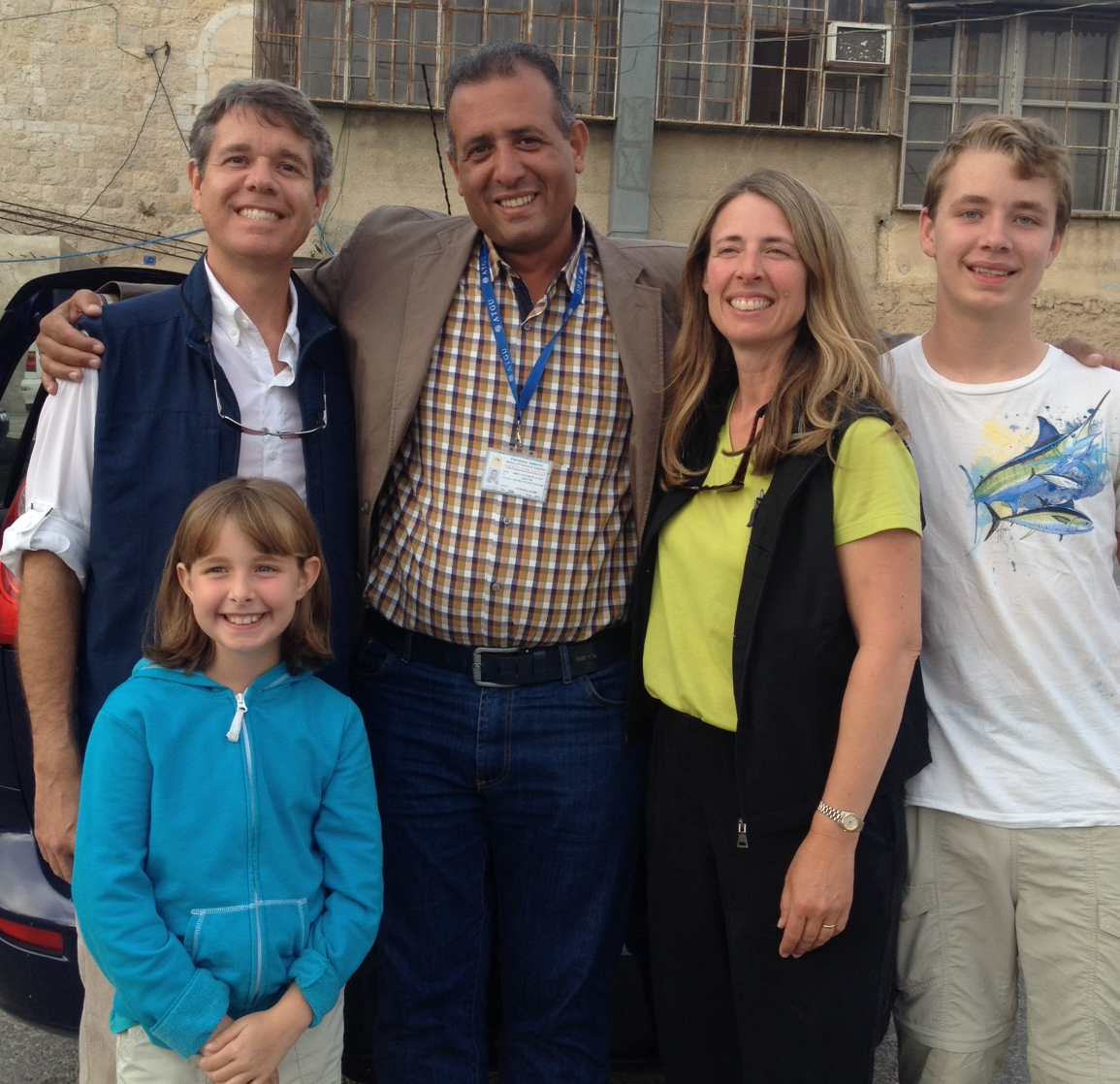
Like so many pilgrims to Israel/Palestine, we wanted to see Bethlehem and Jericho. Our time in these areas was wonderful because of our guide and friend, Naser Alawy, a native of Bethlehem.Naser cropped As we drove south from Jerusalem, Naser met us just before we reached Rachel’s Tomb and the check point to go into Bethlehem.  He showed us where to park our rental car and ushered us through the check point. Then, we shared a deeply meaningful day in Jericho and Bethlehem.

After working as a physical therapist in Spain, Naser wanted to return home. He graduated from the tour guide program at Bethlehem Bible College. I encourage you to contact Naser if you need a guide in these areas. His email address is NaserAlawy@yahoo.com.

In addition to providing historical information and helpful driving, Naser also took us to a Palestinian restaurant for lunch, helped us choose special dishes, and shared a delicious meal with us.

As our day ended, Naser accompanied us back through the check point and escorted us to our car. As I watched Naser walk back to his home in Bethlehem, I was both grateful for a wonderful day and sad to see a special man going to the other side of concrete fences and barbed wire.

Part of the joy of travel includes seeing important places, but it is even more touching to meet wonderful, caring people. Naser is one of the special people we have met during our travels, and I feel that we have a friend in Bethlehem.

I pray for his well being and that of his family, and I hope our paths will cross again.

Magdala Center

Like many pilgrims visiting Galilee, my family tried to pack as much as we could into each day. We saw important places such as Jesus’ town of Capernaum, the Mount of Beatitudes, and the Church of Multiplication of the loaves and fishes at Tabgha.

Near the end of one meaningful but long day, my mother asked if we could stop at Magdala, the hometown of Mary Magdalene. She at least wanted to take a picture. We stopped, thinking that we would be there only a couple of minutes. And, to our surprise and delight, we discovered a jewel on the northern shore of the Sea of Galilee.

The site has amazing first-century ruins including a synagogue, mikveh baths, homes, streets, and mosaics. Archeological digs are ongoing, and the findings surely will continue to be important.

The site also houses the Magdala Center, a Roman Catholic endeavor dedicated to women’s well-being and wholeness. Eventually, a conference center will be built to welcome groups for retreats and gatherings.

Very near the shore of the Sea of Galilee, a chapel was completed earlier in 2014. The architecture is beautiful and deeply inspiring. The colors replicate those found in the first-century synagogue on the site. The entry rotunda includes seven pillars inscribed with women’s names from Scripture. An eighth pillar is left blank, inviting women to include themselves among the faithful ones loved by God. Four chapels surround the rotunda, and each one includes a mosaic depicting a scene from Jesus’ ministry.

The main chapel’s altar is in the shape of a Galilean fishing boat. During worship, congregants look at the altar, then through glass panels out to the sea. They are invited to recall Jesus’ words in Luke, chapter 5, encouraging the first disciples to go deeper into the water and put down their nets.

In the years to come, as funds are provided, the Magdala Center and its work will grow.

If you have an opportunity to visit, I encourage you to do so.

To learn more, go to http://www.MagdalaCenter.com.

IMG_2375.JPG

Gates of Hell

While visiting Galilee, my family travelled north to the Golan Heights to experience the setting of one of Jesus’ important teachings.

In Matthew 16:13-20, we read that Jesus went with his disciples to Caesarea Philippi. He asked them to describe others’ perceptions of him. Jesus asked, “Who do people say that the Son of Man is?” They replied, “Some say John the Baptizer, but others Elijah, still others Jeremiah or one of the prophets.” Jesus then asked the disciples about their understanding of him. Simon Peter replied that Jesus is the Messiah, the Son of the living God. Jesus called Simon blessed and said that he would build his church upon Simon Peter’s confession. Jesus finally promised that the gates of Hades would not prevail against his church.

The setting for this teaching was a cave and spring where the Greek god Pan was worshipped and where Herod the Great’s son, Herod Philip, made his capital. Waters flowed from the spring, spilling through the cave, and it was known as the gates of hell. Jesus used the physical location of the cave to teach his disciples that their confession of faith in him would last longer even than the rocks where they gathered.

Today, the location is in the Banias National Park. It takes a bit more than an hour to drive north from Tiberias, but the drive is worth it. The setting is peaceful and beautiful. The waters coming from the spring and Mount Hermon, just to the north, eventually flow into the Jordan River and the Sea of Galilee.

And, more than the physical beauty and tranquility, the experience provides an opportunity to see how the land and setting informed Jesus’ teachings.

IMG_2345.JPG

Birthday in Nazareth

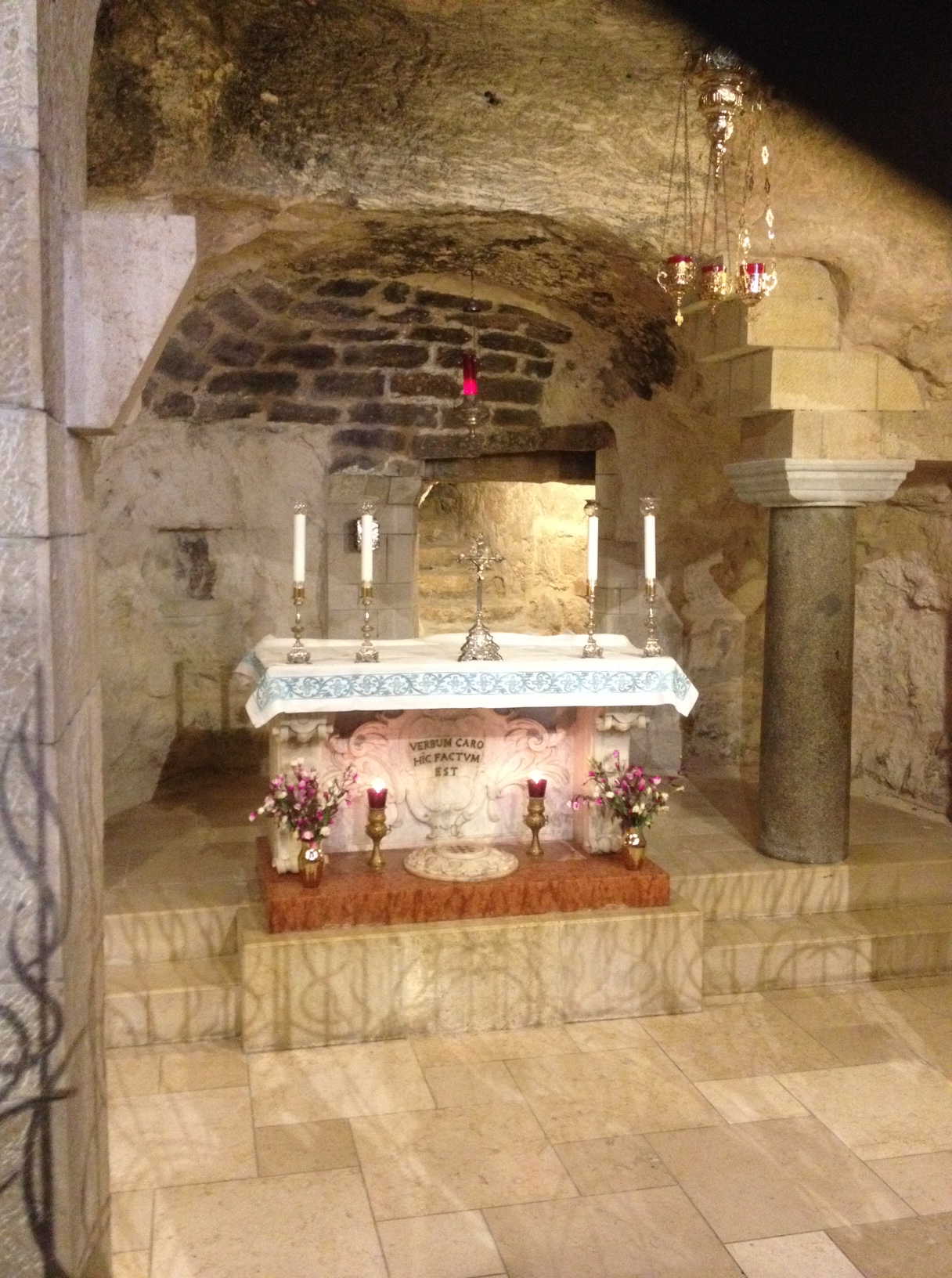
I celebrated my birthday with my family — my wife, son, daughter, mother, and father — in Nazareth. Like most Christian pilgrims, I was drawn to this place because it was the home town of Jesus.  According to Roman Catholic tradition, Mary received word that she would bear the Christ child in Nazareth, The current church building was constructed above the Grotto of the Annunciation, the site believed to be Mary’s home.

Grotto of the Annunciation

Grotto of the Annunciation


I was moved deeply to journey down to the grotto along with other pilgrims. It was a reminder of the depth, breadth, and width of faithful people following in the footsteps of other faithful ones who have gone before us.

Later in the day, after a delicious supper, we stopped by a bakery to find a birthday cake. We met Danny and Bashar, the father-and-son team that had baked the delicious treats that I thoroughly enjoyed. I was delighted to talk with these two wonderful bakers and even better people. Danny and Bashar

All of this made for a great day. I spent time with the people I love most. I journeyed to one of the most important places in my faith tradition. I met people from a different place with whom I shared great conversation. And, I created memories that will last a lifetime. A happy birthday, indeed!

Robben Island

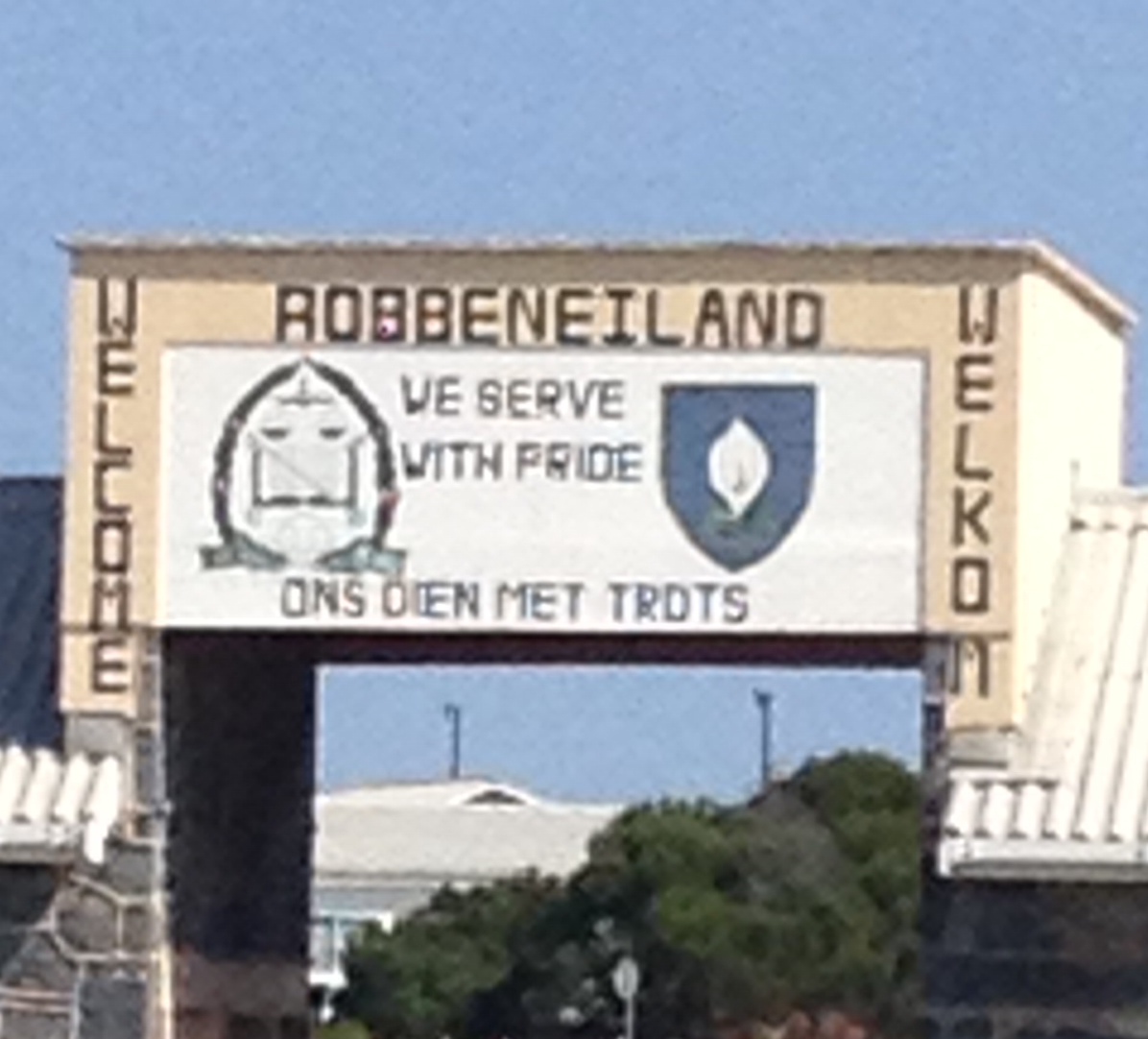
Robben EntryIn his autobiography, Long Walk to Freedom, Nelson Mandela says, “It is said that no one truly knows a nation until one has been inside its jails. A nation should not be judged by how it treats its highest citizens, but its lowest ones — and South Africa treated its imprisoned African citizens like animals.”

I have looked forward to many things about South Africa: natural beauty, delicious food, living history. I fully agree with all those who describe the stunning scenery of Cape Town. The food has been delicious, and this past Saturday we were treated to a fantastic dinner by neighbors in Yzerfontein. They served us Yellow Tail fish they caught from the Atlantic, Wildebeest sausage, and Springbok biltong (a type of dried and cured meat similar to jerky). These have been wonderful beyond words!

But it is the living history that most attracts me to South Africa, and Robben Island is the place that I most wanted to experience.

We traveled to Robben Island on a clear, sunny day. I was struck by the irony of such a beautiful place also being the setting for long and cruel imprisonments. The island is about eight miles from Cape Town, and the views of the city are incredible.
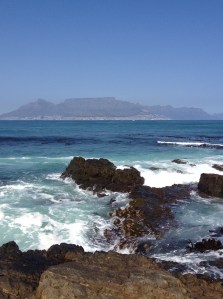
Table Mountain from Robben Island

Table Mountain from Robben Island

As our boat approached the island, my son said with surprise, “This looks more like a resort than a prison.” Mandela himself made the same comment on first seeing Robben Island.

To prepare for this visit, I read Mandela’s book, Long Walk to Freedom. In his book, Mandela describes long days filled with hard labor and difficult conditions. I felt a pit in my stomach looking at the quarry where prisoners worked five days a week for years on end. I listened to our guide, himself a former politcal prisoner at Robben Island, describe the apartheid system even in prison in which prisoners were treated differently based on their skin color. Black inmates, for example, were issued inferior clothes and given less food than prisoners from other racial backgrounds.
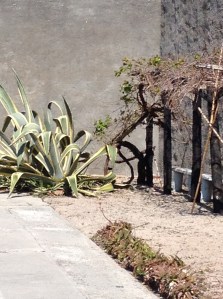
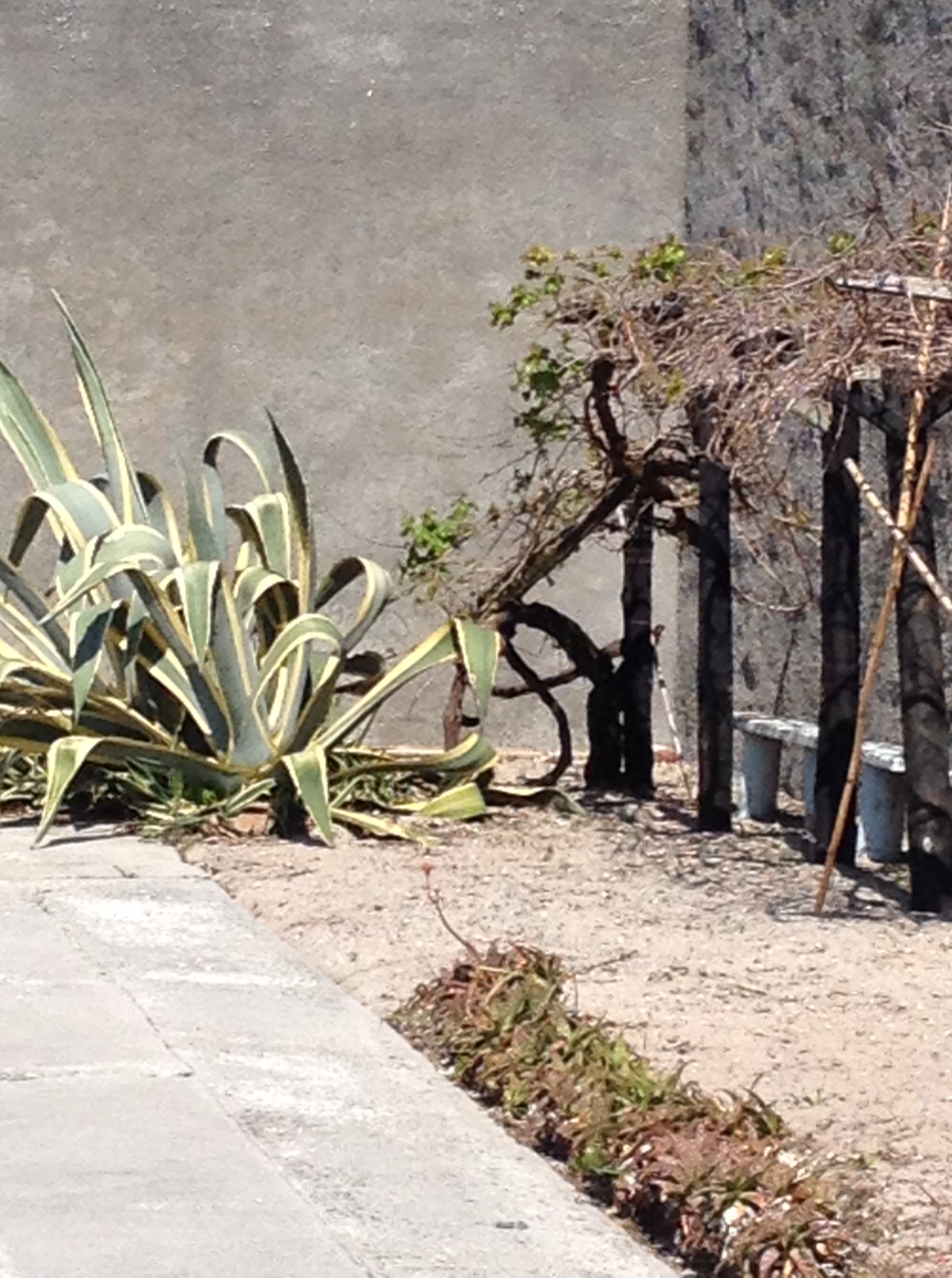
Site of Mandela's Garden

Site of Mandela’s Garden

Despite the unrelenting challenges, Mandela and other prisoners found ways to maintain their hope. Just outside the cell block, you can see the courtyard where Mandela eventually planted a garden and also hid parts of his memoirs in the soil (before they were discovered). In his book, Mandela describes creative ways prisoners maintained communication with one another and the outside world despite officials’ attempts to keep them isolated.
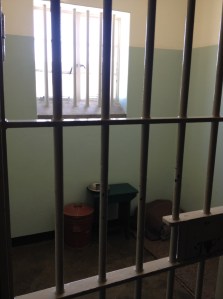
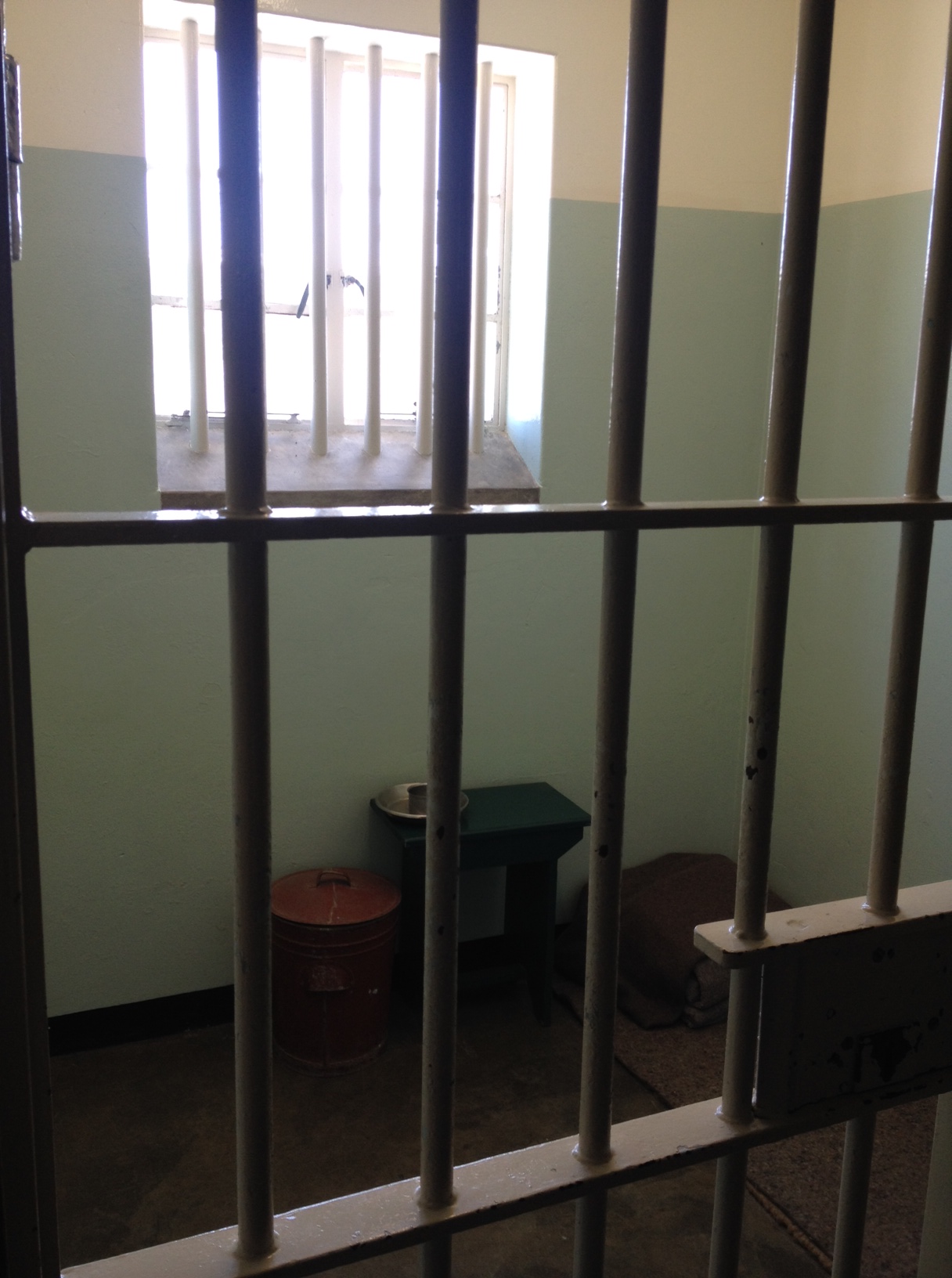
Mandela's Cell

Mandela’s Cell

I was most deeply moved to see Mandela’s cell. In this tiny place where he spent so many years of his life, Mandela remained committed to the cause of a free South Africa. He entered prison at age 44 (the same age I am now), and his commitment to the cause of freedom never waivered.

In his book, Mandela says, “No one is born hating another person because of the color of his skin, or his background, or his religion. People must learn to hate, and if they can learn to hate, they can be taught to love, for love comes more naturally to the human heart than its opposite. Even in the grimmest times in prison, when my comrades and I were pushed to our limits, I would see a glimmer of humanity in one of our guards, perhaps just for a second, but it was enough to reassure and keep me going. [Human] goodness is a flame that can be hidden but never extinguished.”

Thankfully, Mandela’s story — and that of South Africa — does not end at Robben Island. It continued after his release from prison and his time leading the country. Now following his death, it continues in the lives of people committed to reconciliation and justice.

Playing Games and Spending Time with One Another

One of our goals in going on our family sabbatical is to leave behind — at least for a while — the routines and distractions that so often tend to fill our lives.

Staying in hostels these past couple of weeks, we have had no access to television and only limited Internet. This has provided us many chances to play games with one another, something we rarely do at home. (One exception to this is the almost daily Yahtzee games we play while visiting with my In-laws. My mother-in-law is known as the Yahtzee Queen because of her many years of success! I aspire to such greatness, but I am not even close to being a Yahtzee Prince.)

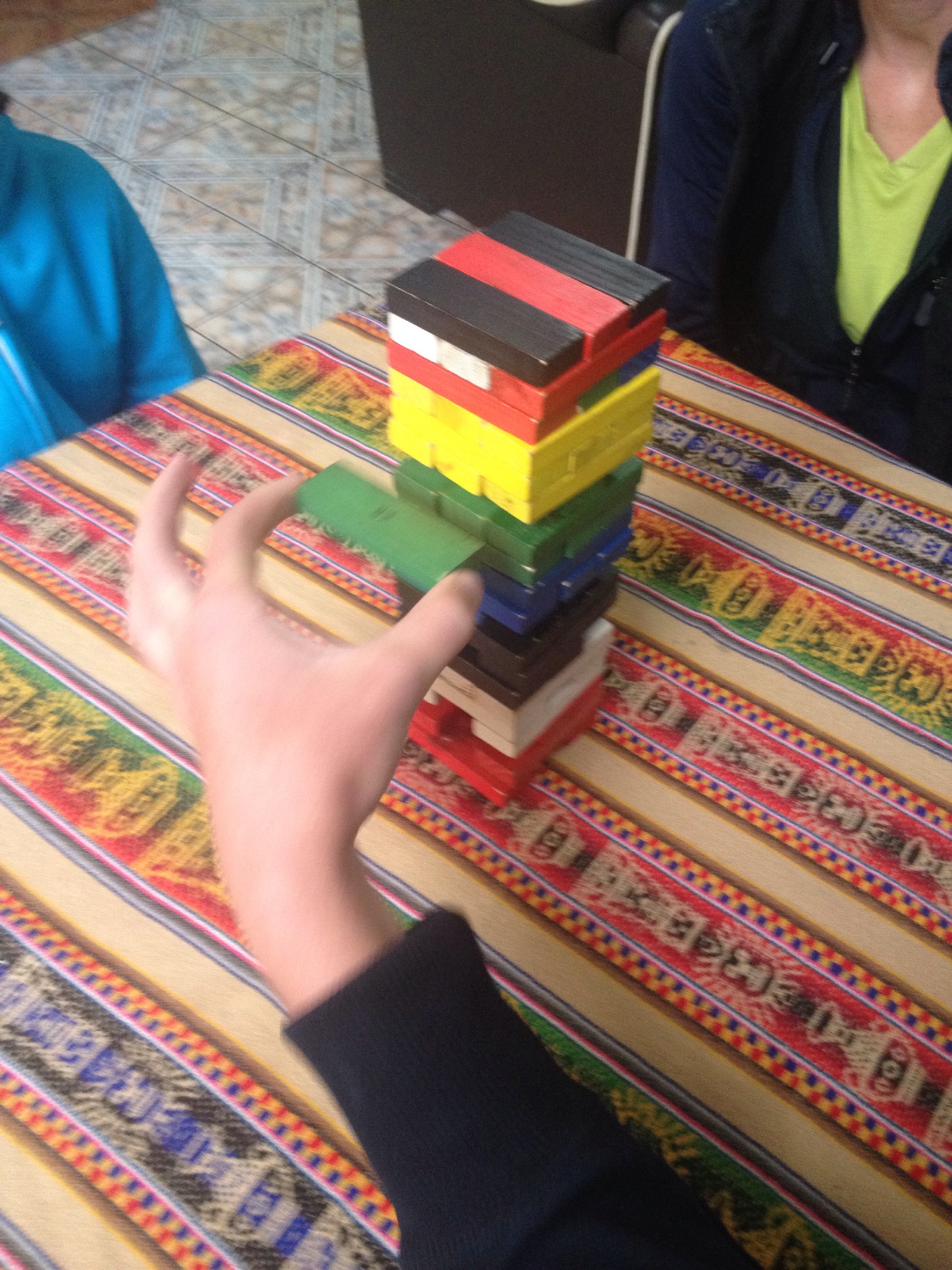
As I’m writing this blog entry, I have just been eliminated from a family Jenga tournament. The tower just crashed as I was pulling out a block.

The other three members of our family are still competing for the coveted title of Jenga Champion. They each are pulling blocks from the tower and hoping it won’t crash down.

We also have a deck of Uno cards with us at all times. Yesterday, we played several games of Uno on a grassy overlook at Machu Picchu. Last summer, we enjoyed playing Uno on the Eiffel Tower and the Chunnel train.

It’s curious that we have travelled thousands of miles to play games with one another, but it is a wonderful aspect of our traveling together.

Now, I’ll begin to plot my strategy for the next Jenga tournament…

IMG_1717.JPG