Category Archives: Family Travel

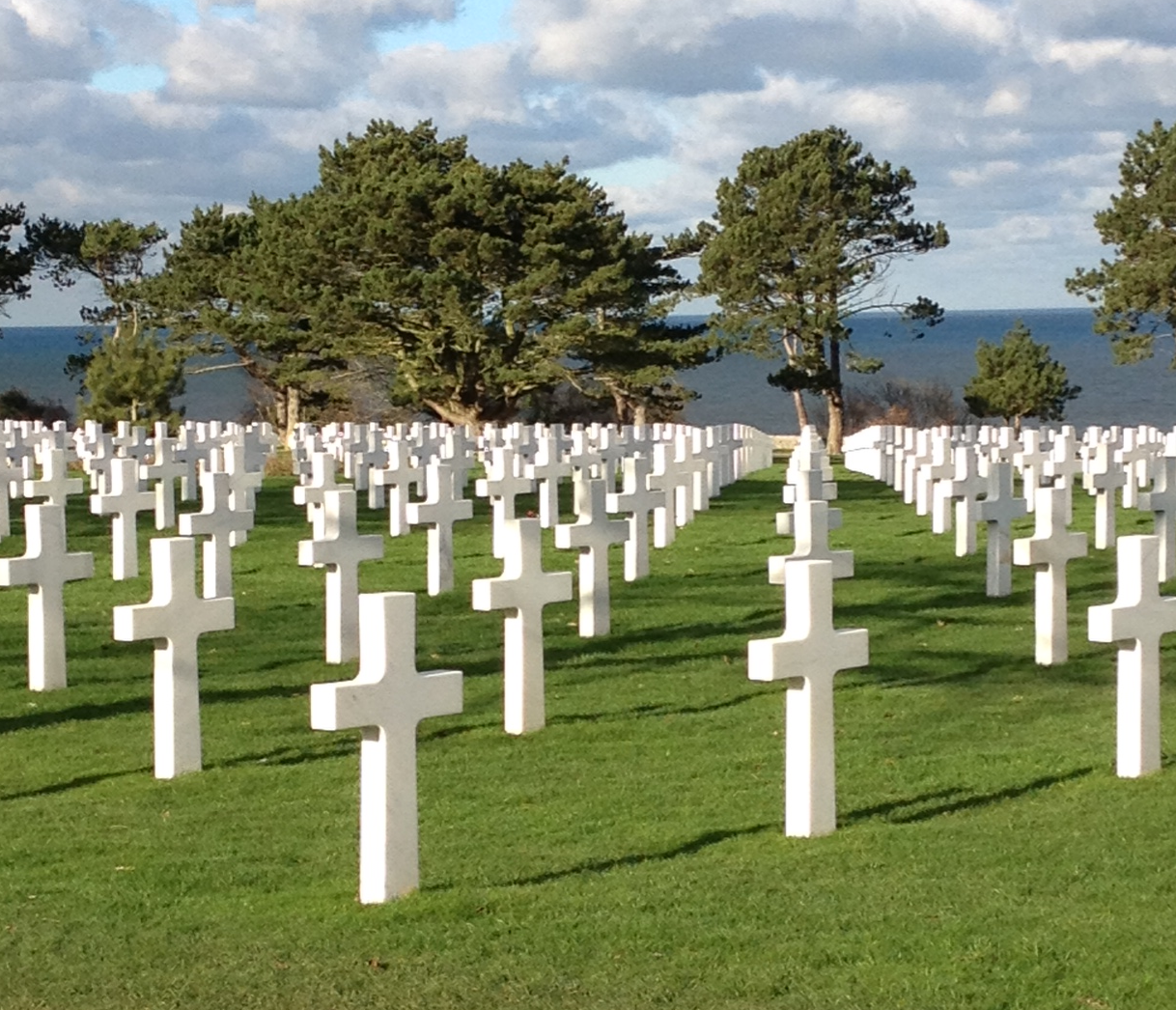
American Cemetery in Normandy

During our time in Normandy, we planned to visit the American cemetery to remember the soldiers who died there. What we did not expect, however, were deeply meaningful visits to British and German cemeteries. In this post, I will reflect on our visit to the American cemetery, and in the next post, I’ll write about our time at the German and British cemeteries.

Looking toward Omaha Beach

Looking toward Omaha Beach

The Normandy American Cemetery and Memorial sits high above Omaha Beach near the towns of Saint-Laurent-sur-Mer and Colleville-sur-Mer. The American Battle Monuments Commission maintains the cemetery, which is picturesque with white grave markers in neat rows. The grounds are immaculately kept, and the serenity that fills the place is a fitting memorial to the brave service members who died in Normandy. Much like Arlington National Cemetery near Washington, DC, the setting is moving and inspiring.

The American cemetery contains the graves of 9,387 service members, and the names of 1,557 service members are inscribed on the Walls of the Missing.

In addition to the grounds, there is an excellent visitors center, which opened in 2007. You can learn the larger story of Operation Overlord and hear stories of individual men and women whose lives were altered in Normandy. Some of them died there, some were injured, and others lost their sons, husbands, fathers, or brothers.

The Spirit of American Youth Rising from the Waves, bronze statue at American cemetery

The Spirit of American Youth Rising from the Waves, bronze statue at American cemetery

One particularly moving experience is the movie, Letters, which focuses on letters written by service men who died in Normandy. While hearing their letters to loved ones and seeing pictures of these young men before and during their military service, I realized the depth of the loss when they died in Normandy.

Visiting the cemetery is well worth the time and effort involved. It is indeed a fitting memorial to the American service members who died on D-Day and in the Battle of Normandy.

A Hymn of Peace

As our family prepared to depart from France, we arrived in Paris on 7 January. As we checked into our hotel, we saw a television monitor with scenes from the attack at Charlie Hebdo. At that moment, the gunmen were still at large and believed to be northeast of Paris in the direction where we were staying. Police presence was heavy that day and again at the airport as we departed the next day. This was a chilling reminder that hostility still permeates much of our world.

British Cemetery, Ryes, France

British Cemetery, Ryes, France

Just a few days before, while in Normandy, our family visited the American, German, and British cemeteries. (I will post about our experiences there in the coming days.)

While at the cemeteries, I reflected on one of my favorite hymns, “This Is My Song, A Hymn of Peace.” While serving as a pastor in the United States, I often included this hymn in our worship on the Sunday closest to July 4, when Americans celebrate the founding of the country.

The hymn reminds me that many people from many countries love their homelands, and it calls people to peace that transcends national borders.

Some stanzas were written by Lloyd Stone in the years between World Wars I and II. Other words were written by Georgia Harkness, a United Methodist theologian and, like me, a graduate of Boston University. The hymn, which is set to the tune Finlandia, says:

This is my song, O God of all the nations,
a song of peace for lands afar and mine;
this is my home, the country where my heart is;
here are my hopes, my dreams, my holy shrine:
but other hearts in other lands are beating
with hopes and dreams as true and high as mine.

My country’s skies are bluer than the ocean,
and sunlight beams on cloverleaf and pine;
but other lands have sunlight too, and clover,
and skies are everywhere as blue as mine:
O hear my song, thou God of all the nations,
a song of peace for their land and for mine.

May truth and freedom come to every nation;
may peace abound where strife has raged so long;
that each may seek to love and build together,
a world united, righting every wrong;
a world united in its love for freedom,
proclaiming peace together in one song.

Given the recent events in France, the prayer of this song is especially fitting. May it be so.

American cemetery, Omaha Beach, Normandy, France

American cemetery, Omaha Beach, Normandy, France

Normandy Beaches

Omaha Beach looking toward Pointe du Hoc

Omaha Beach looking toward Pointe du Hoc

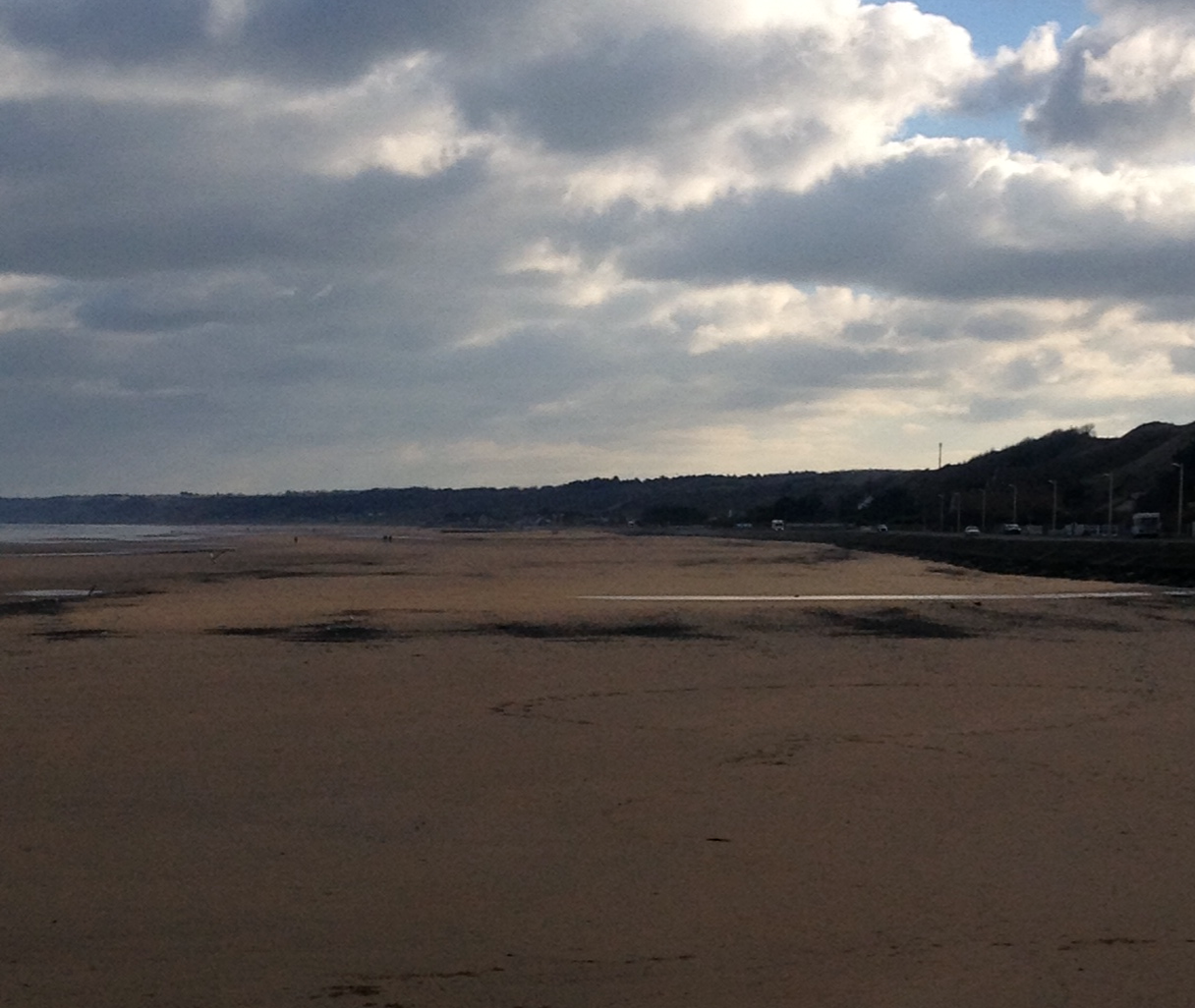
One of the highlights of our time in Normandy was visiting the beaches where the D-Day invasion began on June 6, 1944. While walking on Omaha Beach, the scene of so many American casualties, I was struck by the incongruity of what I saw there seventy years later. The beach was calm, with a few clouds in the sky, and people enjoying their time on the shore flying kites, walking dogs, and playing with children.

Omaha Beach

Omaha Beach

A dear family friend, Zedekiah Cassel, had been a young American soldier landing on the beach at Normandy. Zeddie told a few stories about his time in Normandy, and I wondered what he would have thought to see people frolicking on the same beach where he nearly lost his life. Would he be pleased or upset, concerned or happy?

To enhance my experience in Normandy, I read Stephen Ambrose’s book, D-Day, June 6, 1944: The Climactic Battle of World War II. Near the end of his book, Ambrose quotes General Eisenhower who visited Omaha Beach on June 6, 1964, to mark D-Day plus twenty years. Speaking with Walter Cronkite, Eisenhower looked over the scene and said,

You see these people out here swimming and sailing their little pleasure boats and taking advantage of the nice weather and the lovely beach, Walter, and it is almost unreal to look at it today and remember what it was. But it’s a wonderful thing to remember what those fellows twenty years ago were fighting for and sacrificing for, what they did to preserve our way of life. Not to conquer any territory, not for any ambitions of their own. But to make sure that Hitler could not destroy freedom in the world.

Looking down at Omaha Beach from American Cemetery

Looking down at Omaha Beach from American Cemetery

I suppose the setting in Normandy today, with its calm beaches and tranquility, is what the soldiers would have hoped for. Standing there on the quiet beach and later looking down from the cliffs, I was struck deeply by what they must have faced that day — and how fortunate I am today.

House Sitting around the World

We have included house-sitting as part of our round-the-world family adventure. We have used a couple of online sites — MindMyHouse.com and HouseCarers.com — that match homeowners who will be away with people willing to care for their home and pets.

Our furry friends in South Africa

Our furry friends in South Africa

Initially we were motivated to house-sit because it saves on the cost of housing. Generally, in exchange for caring for the owner’s home and pets, you are provided a nice play to stay (thus saving the cost you would have paid for a hostel, hotel, or short-term rental.) We quickly learned other, far more important benefits of house-sitting. Rather than staying in a hotel separated from local people and habits, living in someone’s home provides you a close experience of regular, day-to-day life in the community. We have been invited to use fully stocked homes. We have learned about local markets and shops. We have received information from trusted local sources about places to visit and experiences to include in our travels. We have met caring neighbors who invited us to their home for dinner. And, we have come to love dear animals.

On one house-sitting assignment, we stayed for a month just north of Cape Town, South Africa, and our duties included twice-daily walks on the beach with loving Labrador Retrievers. The homeowner shared wonderful hospitality with us. We still are in touch with the homeowner several months after our assignment to check on our furry friends.

Christmas in Normandy

Christmas in Normandy

We completed a house-sitting assignment in Normandy, France, where we cared for a sweet and kind nine-year-old Irish Wolf Hound. Our duties included twice-daily walks that took us through fields and past donkeys and horses. The homeowners provided delicious welcome and farewell meals, and because our stay was over the holidays, they even generously gave us presents to open on Christmas morning.
A wonderful terrier in New Zealand

A wonderful terrier in New Zealand

Currently, we are house-sitting in New Zealand where we are caring for a loving and energetic two-year-old Australian Terrier. The home is set in a wonderful location away from town and in the midst of fields filled with cows and sheep. The homeowners have provided special dinners before leaving on their holiday. They are bee keepers, and we have tasted delicious honey from their hives.

Our experience is incalculably richer because of our house-sitting experiences. Sure, we have saved some money, but house sitting is beneficial for reasons far beyond finances. We have made new friends around the world — both human and animal. We have encountered life in different locations in ways we never could have on our own. We have tried new foods and shared stories with dear people around the world.
I encourage you to consider house-sitting, and if you have any questions, please be in touch with me.
Happy travelling!

Iceland

After Phase One of our family’s Round-the-World odyssey (August-November 2014), we returned to the United States in late November and early December 2014.  We enjoyed sharing Thanksgiving and celebrating an early Christmas with family members before setting off on Phase Two on December 16.

We took advantage of IcelandAir’s competitive prices between the United States and Europe and their stopover program, which lets you include a stay in Iceland at no additional cost.  While flying from Orlando, Florida, to Paris, France, we enjoyed two days and two nights in Reykjavik.

Bjugnakraekir the Sausage Swiping Yule Lad

Bjugnakraekir the Sausage Swiping Yule Lad

We loved Iceland.  Visiting just prior to Christmas, we learned about the Yule Lads, thirteen troll-like figures from Icelandic folklore who visit children on the nights before Christmas and either put presents in their shoes or, if they have been naughty, leave them potatoes. When not visiting children’s homes, the Yule Lads are up to mischief such as stealing milk, slamming doors, licking spoons, and swiping sausages.

We enjoyed the weather with freezing temperatures, snowfall, and short hours of daylight.  During our visit, the sun rose about 11:00 each morning and set about 3:30 each afternoon.

We searched for the Aurora Borealis, driving one night about 100 kilometers to find clear skies so we could see the lights.  We think the dim shades of green and red we saw in the night sky were the northern lights.

Blue Lagoon near steam roomsMost of all, we enjoyed our trip to the Blue Lagoon, a geothermal spa located in a lava field outside of Reykjavik. The Blue Lagoon is one of Iceland’s top tourist attractions, and visitors pay hefty prices to float or swim in its hot waters.  Thanks to a Christmas gift from my parents, we enjoyed a package that included a robe, towel, flip-flops, facial mask, and drink.

During our visit, which began after 2:00 p.m. so we could be in the water at sunset, the air temperature was about thirty degrees Fahrenheit.  Snow and sleet were falling, and mist rose from the 107-degree water.  When we ventured outside in our swimming suits, we ran as quickly as we could to the warm water.
iceland-blue-lagoonWe had a grand time in the water.  We kept our heads just above the surface as snow covered our hair.  We applied our facial masks, and we enjoyed our smoothies.  We spent time in a steam room, and our daughter, Rachel, made a snow angel on the side of the pool.

We are glad we included a stopover in Iceland during our travels, and we are especially glad we visited the Blue Lagoon while in Iceland. Is it expensive? Yes. Is it a tourist trap? Yes. Is it worth doing? Certainly, yes.

Blue Lagoon Flip FlopsAs it came time to leave, we faced a small quandary.  It seemed obvious that we should return our towels and robes in the bins at the exit, but there was no place to return the flip-flops.  What should we do?  We kept them, and now we have them with us on Phase Two of our Round-the-World adventure as a fun reminder of a nice time on a great island.

On Safari at Chobe, Bostwana

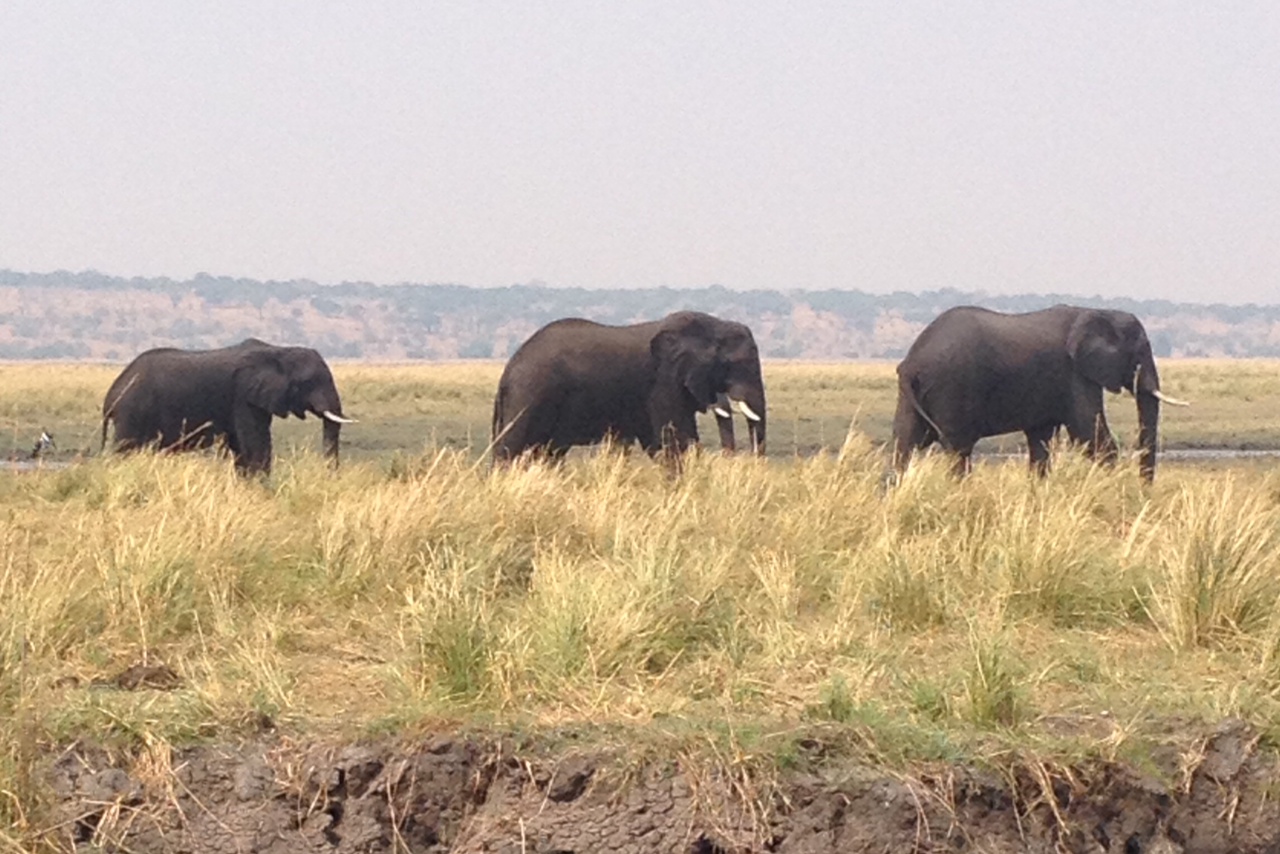
A few years ago, my wife and I went on safari in Kenya. While watching lions, giraffes, water buffaloes, elephants, and other animals I remember thinking, “I really want our children to experience this!” As part of our round-the-world family sabbatical, we included a safari in Chobe National Park in Bostwana. Chobe is best known for elephants, and we saw lots of them, but there were plenty of other animals to see.Safari Bus

HippoWe drove about 70 kilometers from Livingstone, Zambia, to the border with Botswana, went through customs, jumped in a small boat to cross the Zambezi River, and continued to Kasane, Bostwana. Our safari included two boat rides on the Chobe River, several game drives in the Chobe National Park, two nights sleeping in tents, and five or six scorpions at our camp site.

Fish EagleAfter arriving, we boarded a boat with our captain named Captain (no kidding). On the Chobe River, we saw lots and lots of animals up close: elephants swimming across the river, hippos marking their territory (it’s both fascinating and rather gross to watch), crocodiles sunning, water buffaloes grazing, and lots of birds catching fish.

We were especially pleased to see African Fish Eagles, birds that look very similar to the American Bald Eagle with dark feathers and white heads. The birds mate for life, and we saw pairs of them in their nests and flying over the river. The fish eagle has a distinctive call, sometimes called the Sound of Africa, and we were delighted to see the birds and hear their call.

Chobe LeopardAfter our boat ride, we climbed aboard our cruiser with Sinka, our driver and guide. Sinka was a gregarious man with an easy laugh, gentle spirit, and uncanny ability to spot animals. During our first afternoon, Sinka helped us find a leopard by driving slowly around the back of bushes to a shaded area where he thought the leopard might be resting. As we turned, there it was! We gasped in delight to see the big cat. On our second day, we watched another leopard stalk a wart hog before giving chase. The wart hog eluded the leopard and lived another day.

LionsEach day, as the daytime gave way to evening, we noticed the activity changing. Lions began to wake from their daytime slumber and prepare for the evening’s hunt. One evening, we spent a long time watching three lionesses with their cubs prepare to hunt. Gathering their cubs, the lionesses made their way to the river, took long drinks of water, and headed off to hunt as dusk fell over the land.

Chobe Elephant and GiraffeGoing on safari amazed me the second time just as much as my first experience. This time, however, seeing the animals, listening to sounds from the bush, and sleeping in tents was more special because my wife and I shared it with our children. We still talk about the bachelor herds of elephants we saw — large groups of male elephants that have been forced out of herds with mothers and babies. And we still laugh about bouncing to and fro while riding in our open-air cruiser.

Once again, I loved watching the animals and the beautiful scenery, but this time, I especially loved watching my children see and experience all of it.Chobe Bachelor Herd

Victoria Falls

Victoria Falls is known as Mosi-oa-Tunya, “The Smoke that Thunders,” because of the great cloud of mist that rises when the Zambezi River cascades over the falls at the border of Zambia and Zimbabwe.

We visited Victoria Falls at the beginning of October during the dry season, which usually lasts from May to October.  During those months, the Zambezi River slows, and much of the falls does not have water cascading over it.  While this could seem disappointing, it actually makes possible a wonderful visit to the falls.

If you visit Victoria Falls during the dry season, you have an opportunity to swim to the edge at Devil’s Pool.  You can take a boat to Livingstone Island, and from there, you walk near the top of the falls before jumping into the Zambezi.  Then, you swim — or more accurately you are pushed by the current — to the fall’s edge.  Then, a natural rock wall stops you from going over the top of the falls.

Vic Falls RainbowThere, you can sit at the top of the falls, watch water rush past you as it goes over, and see rainbows formed by the mist.  It is an amazing experience that is well worth the time, effort, and expense.

After we finished our swim in Devil’s Pool and were safely back on land, we visited the Mosi-oa-Tunya National Park.  A helpful guide took us on a walking tour of the falls, and because of the lower water level, we walked literally up to the edge.  We stretched out on our bellies and looked over the top of the falls.  Like swimming in Devil’s Pool, it took my breath away!

Victoria FallsSo often we seek superlatives:  the biggest, the best, the tallest, the greatest, the most.  On my trip to Victoria Falls, I was reminded that something can we wonderful — even better — when it is not the biggest, the greatest, or the most.  Had I visited Victoria Falls during the rainy season, much more water would have rushed over the falls.  The spray would have been taller, and the roar louder.  But, I would have missed the chance to swim in Devil’s Pool and found my heart thumping in the midst of the Smoke that Thunders.

Quiet Canal in Venice

We arrived in Venice after a long period of intense travel. After a fantastic time in Zambia and Botswana (more about those destinations in a future blog post), and ten wonderful but exhausting days in Palestine/Israel, we made our way to Italy. We had a deeply meaningful time in the beautiful city of Assisi, including Sunday mass at the Basilica of St. Francis, and three wonderful but also fast-paced days in Florence with our new friend, Alessandro Vannini, a Florentine artist.

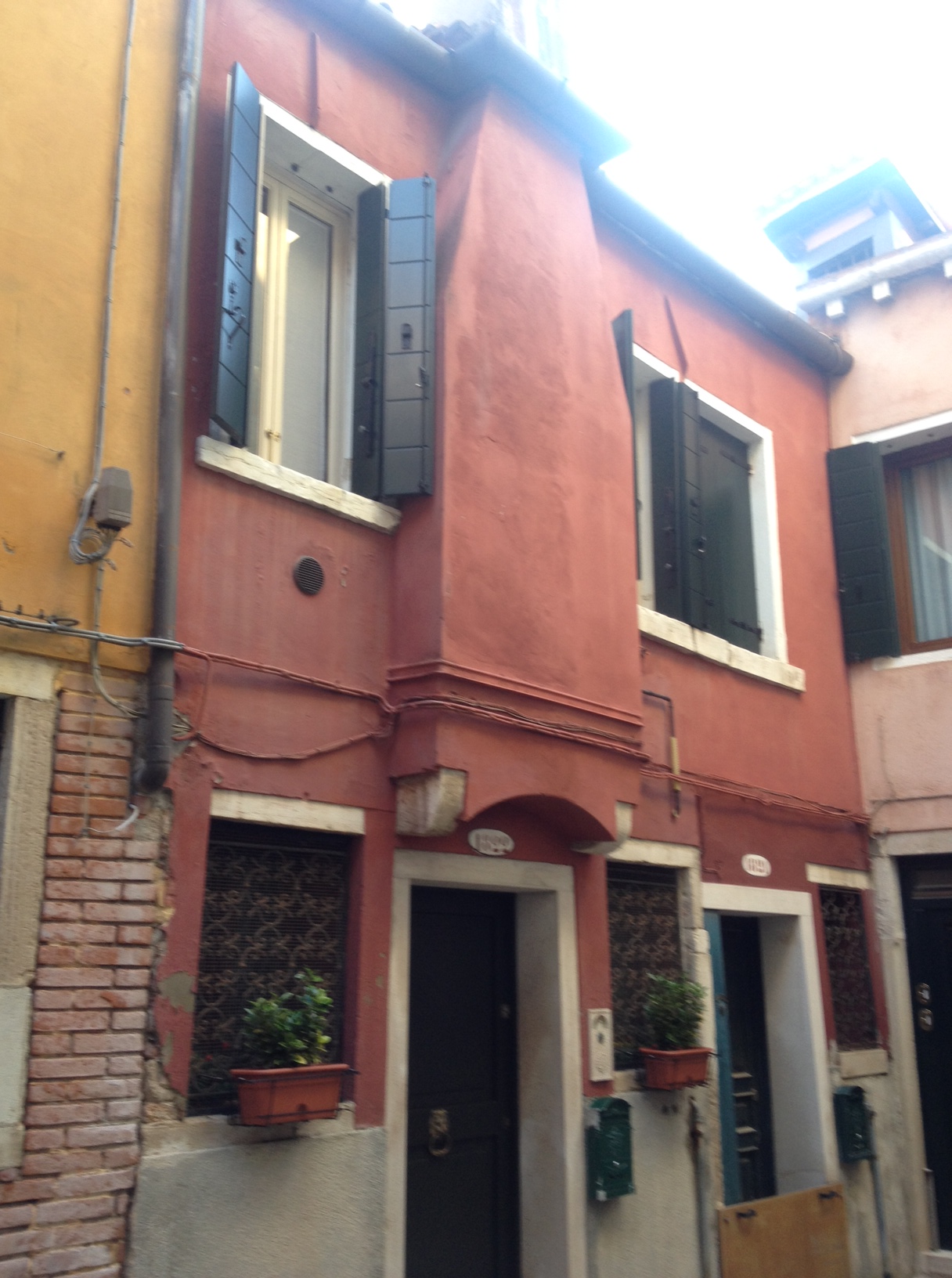
Front of our apartment in Venice

Front of our apartment in Venice

Then, we journeyed to Venice. We parked our car, took the water taxi into the city, and made our way to our apartment. And, we found a wonderfully quiet canal and square that was our home for three days of rest.

It is estimated that thirty million tourists travel to Venice each year. Nearly all of them head to Piazza San Marco and the Doge’s Palace, and we also made our way there to join the crowds filling the area. Even in late October and early November, the area was packed with people.

But we also retreated to our apartment in the San Croce neighborhood far away from the crowds, which proved to be the highlight of our time in Venice. We really enjoyed staying in Venice. It was beautiful and interesting in all the ways we expected. But unexpectedly, it proved to be a quiet and peaceful place to rest after an extended period of intensive travel.

Canal behind our apartment

Canal behind our apartment

My favorite activities were walking around the quiet neighborhoods, especially after dark when street lights kept everything bright, and listening to water lap on the boats in the canal behind our apartment.

If you have a chance to travel to Venice, go. If you like large crowds, you will find plenty of people to join. But, if you are looking for a beautiful and quiet place to be, there are many such spots in Venice.

The Innocents

Two events — unexpected and unplanned — happened during our long-term travel. We spent many days traveling in Palestine and Israel before heading to Italy. In Palestine, we spent time in Bethlehem where we saw Shepherds’ Fields, Manger Square, and the Church of the Nativity. While in the Grotto of the Nativity, we joined other faithful ones remembering the birth of Jesus. About fifty women from Brazil were singing in the grotto, and the sound of their voices reverberated throughout the grotto while we visited.

Numerous other chapels are located in or near the Church of the Nativity. One of these — the Chapel of the Innocents — commerorates the infanticide ordered by Herod after hearing about Jesus’ birth from the Magi. In the gospel of Matthew, chapter 2, we read that Herod ordered the death of children aged two and younger in Bethlehem. The slaughter of the innocents is a difficult, and theologically challenging, aspect of the gospel story.

Chapel of the Innocents, Bethlehem

Chapel of the Innocents, Bethlehem

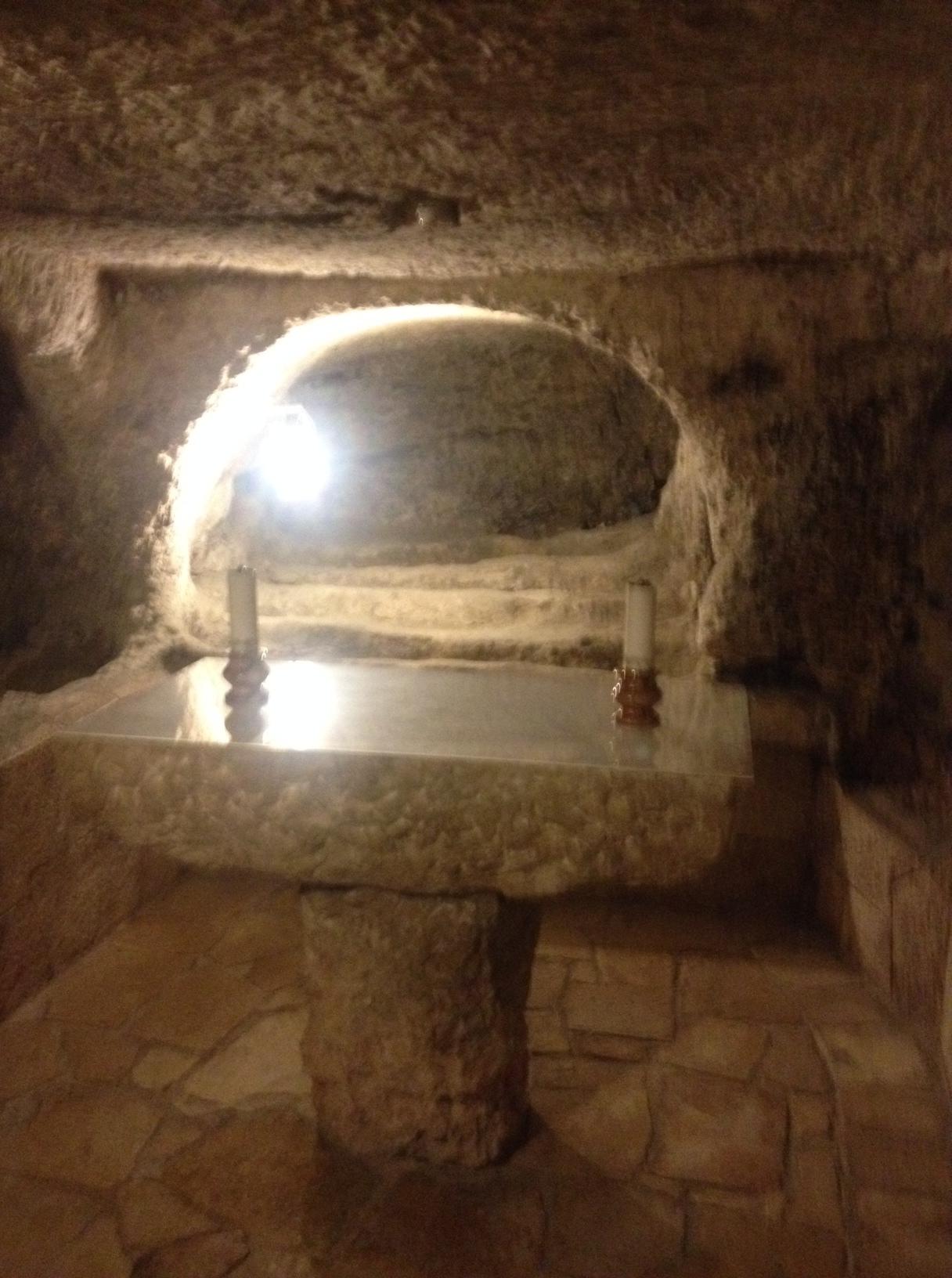
Under the Church of the Nativity, away from the Grotto of the Nativity with its crowds of pilgrims, the Chapel of the Innocents sat quiet and empty. Perhaps that was a fitting testimony.

After leaving Israel/Palestine, we traveled to Italy. While in Florence, we made the rounds of important sites such as the Ufizzi Gallery and the Galleria dell’ Accademia di Firenze. While at the Accademia, I found an unexpected treasure. After seeing Michelangelo’s David, which at seventeen feet tall is incredible and awe-inspiring, I turned left to go into another gallery. There, in a room filled mostly with statues, a few paintings are on the wall. At the far end of the room, on the left side of the wall, I saw a painting that took my breath away.

Antonio Puccinelli, The Massacre of the Innocents (1852)

Antonio Puccinelli, The Massacre of the Innocents (1852)

Antonio Puccinelli painted The Massacre of the Innocents in 1852, and in it, he captures the terror of mothers whose children are to be killed because of Herod’s order. In the background, one mother cries out in anguish over her dead child, lifting her hands raised to the sky. In the foreground, another mother carries her child away, covering his mouth to keep him from making noise and being discovered. Her face is filled with worry as she flees.

Puccinelli (1822-1897), a Florentine painter, was best known for his realism. He depicted everyday scenes with special focus on regular people in normal settings. In The Massacre of the Innocents, Puccinelli captures the experience of a regular woman, a mother desperate to keep her child alive.

After looking at the painting for a long time, I rushed to find my wife and encouraged her to see it as well. Then, together, we looked at this painting, marveling at its depiction of the scene in a way that neither of us had ever seen before.

Jewels in Jericho

Monastery of Temptation

Monastery of Temptation

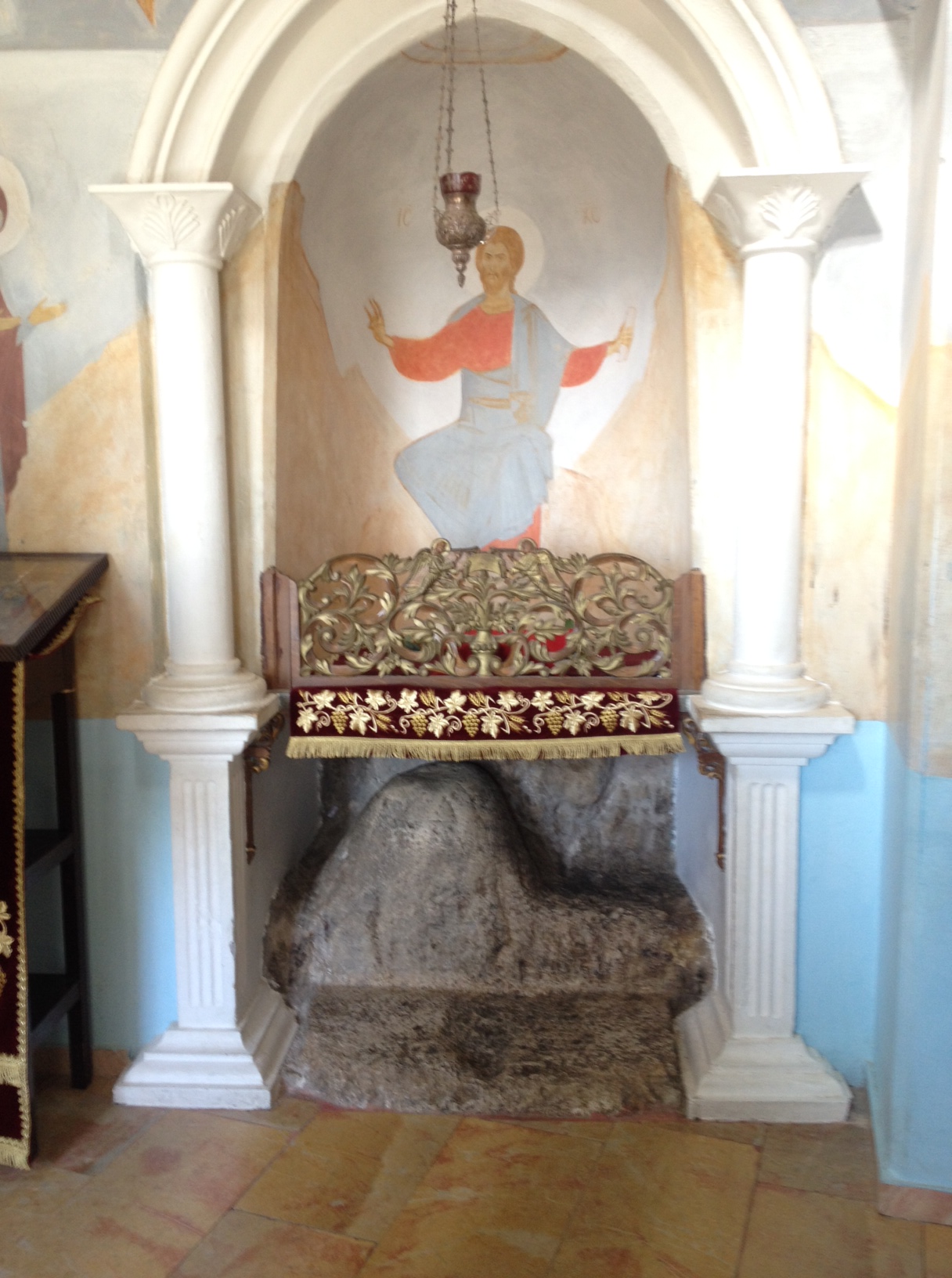
While in Jericho, we traveled up the Mount of Temptation to see the monastery on the site commemorating Jesus’ temptation in the wilderness. The trip is fast and easy today thanks to a cable car that whisks you up the mountain!

Like so many sites in Palestine and Israel, caves provided the setting for important events. Mary likely was told of Jesus’ coming birth in a cave, Jesus may have been born in a cave, and Jesus taught his disciples in caves.

View of Jericho from Mount of Temptation

View of Jericho from Mount of Temptation

The Monastery of the Temptation amazingly clings to the mountainside about 350 meters above sea level, and it encompasses caves in which Jesus is believed to have endured his temptation. From the monastery, you can view the oasis of Jericho in the midst of the dry land surrounding the Dead Sea. It includes beautiful icons well worth seeing.

In one spot, pilgrims are invited to see a rock on which Jesus is thought to have sat while tempted.Rock of Temptation

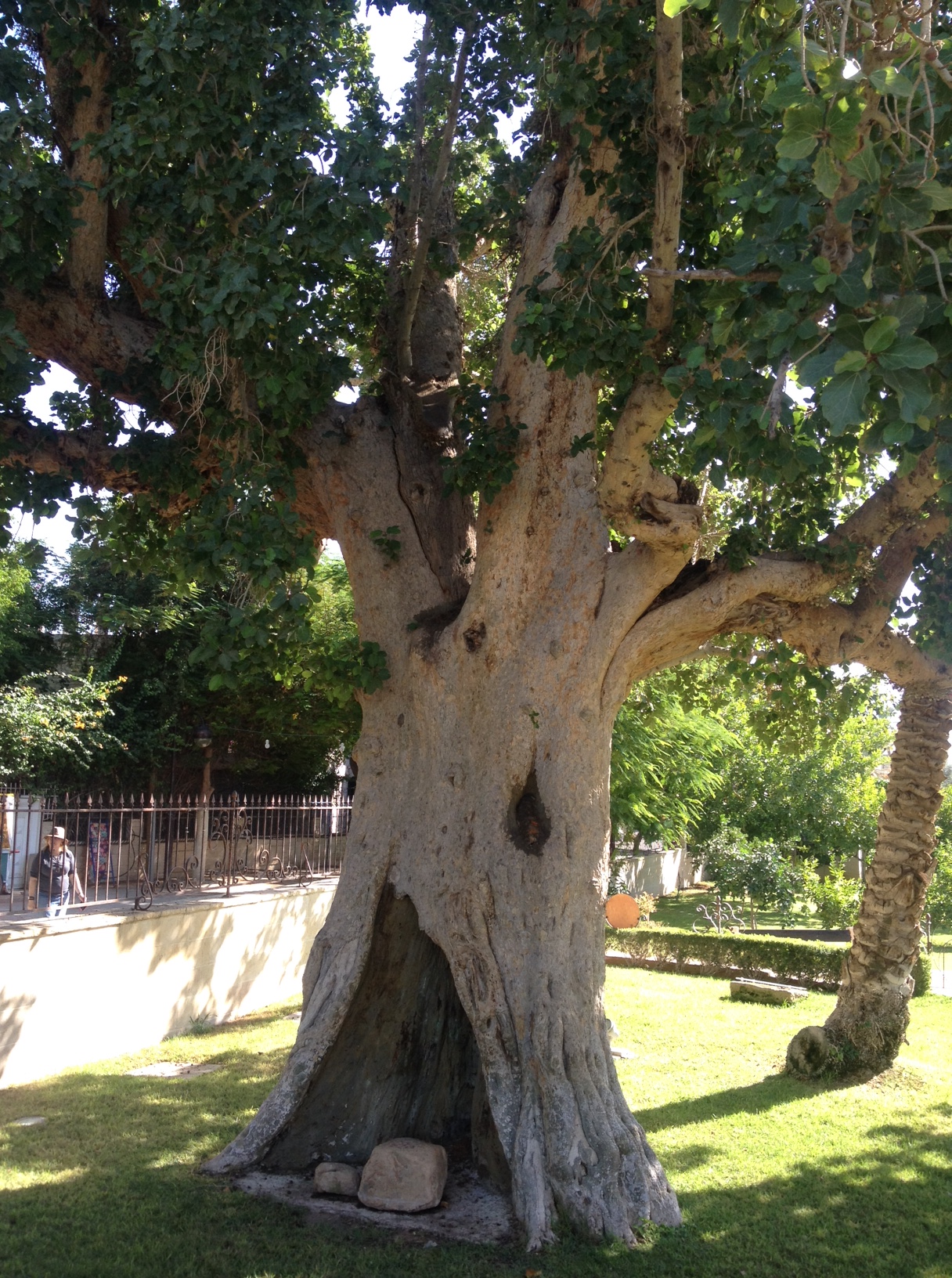
While in Jericho, we also stopped to see the old sycamore tree in town.

As a young child, I remember learning the song about Zaccheus, the tax collector whose short stature required him to climb a sycamore tree to catch a glimpse of Jesus as he passed through Jericho.

Zaccheus was a wee, little man.
A wee little man was he.
He climbed up in a sycamore tree
For The Lord he wanted to see.
And when the Savior passed that way, He looked up in the tree.
And said, ‘Zaccheus, you come down, for I’m going to your house today.’

Sycamore Tree in Jericho

Sycamore Tree in Jericho

Visiting the tree reminded me of Jesus’ audacious willingness to fellowship with people viewed as sinful and despised by others. It also reminded me of the change brought about in Zaccheus. After his encounter with Jesus, Zaccheus gave half his possessions to the poor and restored four-fold any money he had taken wrongly from people. You may read this story in the Gospel of Luke, chapter 19, verses 1-10.

If you have the opportunity, make the trip to Jericho.